Issue StoriesAural Rehabilitation: Some Personal & Professional Reflectionsby Mark Ross, PhD, with an introduction by Geoff Plant, PhD An audiologists perspective on wearing hearing instruments, dispensing hearing aids, and 50 years
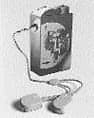
When Geoff Plant asked me to present information at the International Adult Rehabilitation Conference, he said to be sure that I included some of my personal experiences as a hard-of-hearing person. Actually, I wasnt sure if I could or should do this, since I dont feel all that comfortable talking about myself. On reflection, however, it really may be a good way to introduce a conference on Aural Rehabilitation (AR), since I do believe that there are lessons we can draw for the present day from my personal experiences a half-century ago My hearing loss was detected in l951 while I was in the Air Force, although I think its onset occurred during an earlier period of military service. Of course, like just about anybody else with a hearing loss, I knew I had some hearing difficulties and, like many other people in the same predicament, I simply tried to ignore its presence, getting along as best I could. At the time, the only help I would have considered would have been medical or surgical, that is some way to cure or fix my hearing loss. Fortunately for me, I was not given a choice. After I was given an audiometric test, which clearly revealed the presence of a hearing loss, I was transferred to Walter Reed Hospital to be enrolled as an involuntary participant in their AR programbut not before the examining otolaryngologist told me that I had a progressive hearing loss and that I would soon be going deaf! It was only many years later that I realized that the doctors definition of deaf and mine were quite different. Without hearing aids, I would indeed be deaf, but certainly not with them. From my perspective, the only definition of deaf that counted was my ability to use audition as my primary communication mode. The fact that I can still do this, even with a bilateral 90 dB hearing loss, tells me that I am not functionally deaf. This doctor did me, and Im sure many other patients, a disservice when he employed a term in one way that most people would understand differently. Simply said, his comment scared the hell out of me, and this fear stayed with me for years until I learned better. In any event, the Air Force gave me no opportunity to object to the transfer, or to engage in the usual and agonizing self-defeating exercise of denial. Ironically, it now appears that one of the merits of this entire process may have been the fact that I did not have a choice: being in the military, I was simply ordered to go and I did. In my case, there was not the usual seven-year delay between the symptoms of a hearing loss becoming apparent and the acquisition of hearing aids. Clearly, this is not a model that we can follow in civilian life, however much we might sometimes wish it. The Walter Reed AR program lasted for two months, during which time the participants were all boarded together in a separate physical facility. Each day and all day we went to various kinds of classes, ranging from general information about hearing loss to speechreading and auditory training. At the beginning of the program, we were issued hearing instruments that were selected for us by the traditional Carhart procedure. This entailed being tested with about four to six aids, trying to determine which one was best for us. The measures included unaided and aided speech discrimination tests in quiet and in noise, comfort and uncomfortable determinations, and both use and full gain aided speech reception threshold (SRT) tests. Best was defined in terms of higher speech discrimination scores, wider dynamic range, lower aided SRTs, and subjective preferences. Cosmetic preferences, as can be imagined, never came up. This test battery would take almost a complete morning or afternoon. Even so, this was not the end of the process. About once a week, I returned for follow-up testing and such fine-tuning as could be done in those days. Complaints and problems with the hearing instruments and earmolds could be handled almost immediately. However, it is important to note that unlike today, when the provision of hearing instruments is often considered the end point of our efforts, in this program the hearing aid was just one component of a comprehensive AR program. The formal program was supplemented by many bull sessions and informal exchanges between the patients that took place during, in-between, and after classes. Although we did not use the term coping and communication strategies, this was in essence what was going on. We shared our hearing experiences, some of our feelings (being macho young men, we didnt delve too deeply into ourselves), and examples of what kinds of communication tactics worked and did not work. Actually, in retrospect, these experiences were probably the most valuable aspect of the program. The group interactions provided the kind of emotional support impossible to replicate in individual counseling sessions. This is definitely a lesson that we can take to heart even now. Although we thought we were learning how to lip-read and how to make better use of our residual hearing, and some of us undoubtedly were, what was also happening was that we were learning how to accept the hearing loss and accept ourselves. We would joke with one another about being on the air when we put our hearing aids on and, by example, encourage those who were reluctant to wear them. Unlike the pressures that new hearing instrument users now often feel that can lead to them to discard their hearing aidsfeeling different, stigmatized and a bit ashamedthe social climate in the AR program was exactly the opposite. It was expected that everybody would conform to the accepted practice by regularly wearing his hearing aids. The fact that the program lasted for two months made it easier to continue our good hearing aid habits after we left. The hearing aids we were issued were monopack vacuum tube hearing aids, requiring an A battery that had to be changed every two or three days and a B battery that would last a week or two. We felt very lucky to be the recipients of these small convenient instruments, particularly since we were told that the groups who preceded us were issued duo-pack hearing aids; these required a battery pack physically separate from microphone and amplifier. Besides, being in the service, we could hardly insist on receiving more cosmetically acceptable devices. First, because this kind of demand was simply unheard of in those days, and second, cosmetic concerns, even if we could have conceived of how far down the ear canal they have taken us nowadays, were simply not an issue. We wore what we were ordered to wear, on the professional judgment of what was considered best for us. Nowadays, unfortunately, professional judgment (relative to performance) often takes a distant back seat to a patients expressed cosmetic concerns.
After the AR program, I spent three more years in the Air Force, spending much of that time in North Africa where, I believe, I may have been the only person wearing hearing aidsif not on the entire continent, then at least in the immediate region. Theres another, very important lesson, here for the present day: Because I accepted the fact that I had to wear hearing aids, and accepted myself on this basis, I truly believe that their presence was completely irrelevant as far as my work and social activities were concerned. I didnt make a big deal about the fact that I wore a hearing aid and, consequently, neither did anyone else. If somebody asked about it, I simply said it was a device that helped me hear like eyeglasses help someone see. I can not think of a time when this explanation did not suffice. Ive never really accepted the notion that the wearing of a visible hearing aid is associated with a negative personal appraisal, some kind of social stigma invoked by society on hearing aid users, or what has been termed the hearing aid effect. Of course, I do know that some people in our society may initially judge hearing aid users as less competent and less desirable, etc. But Im convinced that, given self-acceptance on the part of the hearing aid wearer, the attitudes of those who look askance at them will soon either be irrelevant or changed. Instead of confronting this presumed stigma, however, we pander to it by focusing on cosmetics rather than performance and need. I should point out, however, that, even with the exemplary program I participated in, I still felt a great deal of uncertainty about how the hearing loss was going to affect my life. Given the initial diagnosis of progressive hearing loss, I was understandably insecure about the future. So when I returned to the U.S. from North Africa, I asked to be transferred to Walter Reed Hospital so that I could take the AR program once again. To its credit and my benefit, the Air Force agreed to my request. In a sense, what I was asking for was an AR booster shot. Even more than my first experience, I believe it was at this time that I truly came to terms with the fact that I had a permanent hearing loss. It was at this time that I accepted the notion that, while its presence was clearly going to produce some difficulties in my life, the fact that I was hearing-impaired need not restrict the course of my life in any fundamental way. There are lessons we can draw from this for the present day. Just because we have, or think we have, provided what we believe to be an appropriate AR program to our patients, that does not mean that they will thereafter be cured and never need darken our doors again. As we well know, it doesnt work that way. We know that peoples hearing losses and their communication needs change over time. We know that much of what we covered and what we thought we had resolved initially may have been forgotten. And we know that new devices and techniques that may offer benefits previously unavailable are constantly being introduced Our clients often need a booster shot from us, a provision that should necessitate a routine follow-up program. The Stigma of Wearing Hearing Aids So, for the first year I was at college, I sold hearing aids part time. In all that time, I sold just one aidand that only because one of my brothers arranged the sale! I worked by knocking on the doors of people who had made some sort of inquiry in the past. Their responses really exposed me to some of the attitudes about hearing loss that pervaded our society then and, to a large extent, still do now. People I saw would deny that they had a hearing loss, even as I had to shout at them to be heard! Or they would be very upset that I somehow knew about this terrible secret of theirs. After all, they were promised when they responded to an advertisement that they would be sent material in a plain brown envelope, so nobody would know that they inquired, and that no salesman would come knocking at their door. And here I was exposing their shame and stigma for all the world to see! Salesmen were advised to stress how small and invisible the hearing aids were. These, we should note, were body aids. All kinds of strategies were used to minimize visibility, from transparent tubing that ran from the earmold to the receiver pinned under the collar, to beret style aids that were placed in the hair. Fifty years later, were still doing the same thing. It doesnt seem to matter how technically advanced hearing instruments have become, or how tiny these really sophisticated devices are; theyre still not sufficiently invisible for many people. And for this population, they never will be small enough. Its clear that the problem is not the visibility of the hearing instruments, but rather the acceptance of the hearing loss. In the 50 years that Ive been involved with the hearing care field, it has consistently communicated mixed messages. On the one hand, we justifiably stress the technical advances incorporated in modern hearing instruments. At the same time, however, we also emphasize how tiny they are, how they can fit all the way down in the ear canal and that nobody need know theyre wearing hearing aids. What is happening is that we are reinforcing the very denial attitudes we are trying to overcome. By stressing invisibility, we convey the message that there is something shameful about having a hearing loss, that it is a stigmatizing condition that people must disguise as well as they can. Im convinced that more potential hearing aid candidates are discouraged from trying needed amplification by this type of appeal than are motivated to try them by the cosmetic arguments. People dont hear the cosmetic appeal as loudly as they do the underlying shame and stigma message. If we cant get people to acknowledge the fact that they have a hearing loss, there is nothing we can do to help them. Clearly, they are not ready to help themselves. One measure of our success in this endeavor would be the percentage of people who can potentially benefit from amplification who actually wear hearing aids. In this country, that figure is usually considered to be about twenty percentnot a very impressive record. Taking the Hearing Loss Seriously If we only had to convince the general public and policy makers regarding the potential implications of a hearing loss, and the need for AR services for most people with hearing loss, then our challenge would be straightforward, if not easy. Unfortunately, it seems to me that before we educate others, we need to start by educating ourselves. This can be seen in the hearing instrument selection and dispensing model most often employed by hearing instrument dispensers. The focus is on the instrument, on the hearing aid itself, and not on the person with a hearing loss. In the ordinary sequence, a client first receives an audiological evaluation, after which the hearing instrument is selected and several follow-up appointments are scheduled. The average total time devoted to all of the activities associated with the hearing instrument selection, from the initial testing and personal interview to the actual fitting to follow-up and counseling, is little more than two hours.1 On average, less than an hour is spent on the counseling component. 2 In this period of time, the dispensing professional has to deal with the electroacoustic challenge presented to the patient. The aids have to be selected and programmed, the person has to be instructed on how to care for them, and time has to be spent dealing with the invariable adjustments and reprogramming. Perhaps the current model provides sufficient time for these activities. But there certainly will not be time to deal with the other personal and social issues arising from the hearing loss. What we are implying is that all that hearing-impaired people need to correct their hearing-related problems is an auditory prosthesis, that we have met our professional responsibilities once the hearing aid is selected and properly fit. The fact that people want and need more information can be seen in the marketing survey prepared for the AAA.3 Almost half the hearing-impaired people responding to the survey reported that they would have liked more information on how to select, wear, and care for hearing aids. About 40% of them wanted to learn more about the causes and treatment options of hearing impairments. Even this relatively high number probably underestimates the number of people who could use and benefit from such information. It is not as if there is any real dispute among hearing care professionals regarding the consequences of a hearing loss. There is also an enormous body of literature on this topic, much too much to review in any detail here.4 And the work continues. For example, Carren Stika has conducted focus groups with hard of hearing people and their significant others with revealing results.5,6 The fact that a hearing loss can have a pervasive and profound effect upon the affected person and his/her family was clearly demonstrated in this project. Implicit in the current hearing instrument dispensing model is the assumption that the provision of hearing aids are both a necessary and sufficient response to the hearing loss condition. This model implies that they can functionally cure the hearing loss and that further services are either unnecessary or not cost effective. We would all agree that hearing instruments are an absolutely necessary measure to take in most instances of hearing loss; however, I would hold that for most people, a hearing instrument by itself is insufficient. Of course hearing aids help, and of course most people, comparing their ability to function without and with hearing aids, do better with them than without them.4 No doubt, also, many such people would believe, at least initially, that their hearing problems have been solved or at least rendered functionally irrelevant by the hearing instruments. Not knowing any better, they either accept less than is possible, and simply live with the resulting limitations and problems while enjoying the benefits. This is not good enough. We can do better. For example, about 16% of people eventually stop wearing their hearing aids, and that a similar number rate their hearing usage as unsatisfactory.7 Satisfaction percentages seem to hover somewhere between 60-70%. We also know that, with additional counseling and follow-up programs, we can reduce the number of returns and increase benefits, use and satisfaction rates (reviewed in Ross8 and Kochkin2). Indeed, a number of the papers given at the HRF conference explicitly addressed the organization, advantages and cost effectiveness of AR procedures that go beyond the simple provision of a hearing instrument or cochlear implant. The key limitation, of course, is timeand how to find it. It takes time to listen to our clients and to deal with the communicative, as well as the psychosocial implications of a hearing loss. It takes time to conduct a group hearing aid orientation program. It takes time to evaluate the need for and to provide other types of hearing assistive technology. And it takes time, particularly for older people, to work through the fitting procedures until they reach the point at which they are receiving the full benefits of hearing aid amplification. As we keep hearing over and over again, Time is Money: where do we do find the money to pay for the time? Redefining the Hearing Instrument Selection Process The most important of these lessons is that we need to conceptualize the selection and dispensing of hearing instruments within a larger framework. While it may sound like a cliché, we do have to keep in mind that are not working with a pair of ears but with the person to whom the ears are attached. We should view the hearing instrument fitting as an opportunity to explore a number of hearing-related issues and to help the hearing-impaired person deal with them. We must, in brief, redefine the hearing aid selection process in a way that routinely incorporates a multi-session group hearing aid orientation, or short-term AR, program.8 I hasten to point out that this is not an original concept; it has been recommended, written about, and practiced by many of our colleagues (e.g., see Abrahamson10). I do believe that such a program should not be optional, but simply be included as a routine component of the hearing instrument dispensing process. For the same reason we would not think of fitting someone with a hearing instrument unless a prior audiological evaluation was conducted, we should not fit hearing instruments without an organized follow-up program. This is based on the assumption that the overwhelming majority of people acquiring hearing instruments for the first time need the kind of services and information outlined above. By separating these services from the hearing aid itself, by referring only some of our clients to an organized follow-up program, we send a message that only exceptional hearing instrument users require and can benefit from such a program. On the contrary, I believe that we should send the opposite message: that a hearing aid, while certainly the centerpiece of the aural remediation effort, is only one of the tools that can be used to reduce the communicative and handicap impact of a hearing loss. What this implies is that the expenses of the short-term AR program be included in the cost of the hearing aids.11 In summary, we tend to minimize the total impact of a hearing loss with our current management model. Most people can use and benefit from the additional services a short-term AR program can provide. Such a program can be most efficiently and conveniently included in association with the acquisition of hearing aids. In this respect, the lessons from the past are very clearif we but listen to them.
Correspondence can be addressed to Mark Ross, PhD, 9 Thomas Dr., Storrs, CT 06268-1211; email: markross@uconnvm.uconn.edu. If you would like to obtain a copy of the conference proceedings, or find out more about the next conference (to be held in May 2003), address correspondence to: Geoff Plant, Hearing Rehabilitation Foundation, 35 Medford Street, Somerville, MA 02143; website: www.hearf.org; email: hearf@aol.com. References |
|
|
Featured Jobs
Find a Job |
ADDITIONAL ONLINE RESOURCES |
Featured Employer
|