Issue StoriesStaff Standpoint
The Dynamics of Digital
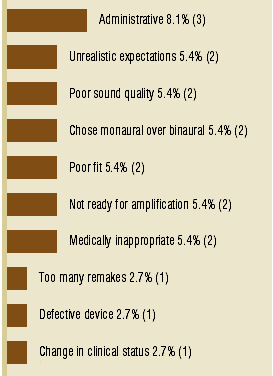
HR estimates that, by the end of 2002, quarterly sales of digital sales could come to represent almost 40% of the market. How significant is this trend for the average dispensing professional? In 2000, HR estimated that 32.1% of dispenser net revenues were associated with the dispensing of digital instruments, while 36% relied on programmable analog devices. Should sales of digital instruments reach the 40% mark and the price of DSP aids remains stable, it is quite possible that DSP instruments would constitute as much as 55% of the average dispensing professionals net revenues by the end of this year. That means, when DSP revenues are combined with analog programmable revenues, the average dispensing office would be nearly 80% dependent on high-performance programmable devices (ie, both analog and digital) for their income. Considering that it took almost a decade for analog programmable instruments to climb above 10% market penetration, the ascent of digital instruments to their current prominence in the field is nothing short of remarkable. (A look at the overall market trends will be published in HRs annual market review, appearing in March.) Digital technology is also widely thought to have precipitated the recent consolidation movement within the industry and beckoned in a new era of product development and research. This months HR interviews industry experts who are involved in the development, implementation, dispenser education, and marketing efforts that are contributing to the digital revolution. Part 1 of this series, which starts on page 12, provides information on the evolution of digital technology, speech-in-noise algorithms and tests, surprises in digital capabilities, and the development of the audiological rationales that distinguish the products. Additionally, the DSP Buyers Guide on page 30 provides a quick reference to the digital products available today. This issue of HR also features a revealing article by John Weigand, AuD, and colleagues on the topic of hearing instrument returns. The researchers tracked the hearing instrument returns of a busy clinic throughout 1 year to find several interesting correlates that include hearing instrument types and styles, as well as patient insurance status, that affect return rates. Also in this issue, an article by Mary Beth Jennings, MCISc, features information about a unique hearing education program that combines the efforts of the Canadian Hearing Society with Elderhostel Canada. These types of programs hold great promise, as Jennings states, to realign hearing loss with images of independence and vitality. The staff of The Hearing Review extends to you our best wishes for the new year, and we are grateful for our readers continued input and guidance on important issues within the industry. As always, we look forward to your comments. Karl Strom |
|
|
Featured Jobs
Find a Job |
ADDITIONAL ONLINE RESOURCES |
Featured Employer
|