Issue StoriesShell Technology: The Shape of Things to Come in E-businessby William Lesiecki New virtual impression systems are the first harbingers of the new age of e-business. This article examines the concepts of virtual integration and looks at how using 3-dimensional scans of impressions are rapidly transforming the traditional shell-manufacturing process. This years HR Dispenser survey (June 2002 HR, pages 14-32) pointed out a significant trend: 80% of all dispensing professionals now say that they are onlineup from 69% last year. This is great news. Why? Because the Internet is having an amazing impact on how business gets doneand its influence continues to increase. Today, because of the proliferation of the Internet, business and e-business are quickly becoming one and the same. In recent years there has been an explosion of Internet-based technologies permeating almost every aspect of our daily lives, and there seems to be no end in sight. Internet technology has also become less expensive and more user friendly, making it easier to adapt and integrate these technologies into the hearing care business structure. A Virtual Orientation in the Hearing Care Business For the sake of this discussion, the process is defined as all aspects of delivering a hearing instrument to the user. This includes, but is not limited to:
High rates of return continue to be a significant issue affecting the manufacturer, hearing care professional, and end-user. Unsuccessful fittings result in a loss of time and money for both the dispensing professional and the manufacturer alike. They also have a damaging effect on customer satisfaction. Custom instruments have been manufactured essentially the same way for the last 30 years, and their manufacture relies heavily on the ear impression. The impression process can arguably be considered the weakest link in the custom production and delivery chain. A new process for manufacturing hearing instrument shells, called LasR (Laser Accurate Scan Replication), has recently been developed by Siemens Hearing Solutions. LasR-made shells have been shown to provide higher levels of client satisfaction for factors such as wearer comfort, retention, and lack of feedback.1 These findings have recently been corroborated using a sample of 125 hearing instrument users (T.M. Velde, unpublished data, 2001). The new process shows great promise to enhance the accuracy of the shell fit by more accurately reproducing the original impression while reducing manufacturing turn-around time.
This new process, as well as processes like it being developed industry-wide, are the cornerstone of virtually integrating the hearing instrument delivery process (see sidebar on page 50). It has also initiated a complete re-engineering of the custom hearing instrument manufacturing process at Siemens. The process is designed to take advantage of other significant developments, such as electronic form (e-form) ordering, on-line information access, electronic data transmission, and new manufacturing processes such as laser sintering. Inefficiencies in the Impression-Taking Process 1) The impression-taking process itself. Taking a physical impression of the clients ear introduces many opportunities for error. It is greatly influenced by the material used, manner in which the material is injected into the ear canal, anatomy of the ear canal, movement of the jaw, and the experience level of the dispensing professional. Impressions received by manufacturers are often less than optimal for accurately producing a shell that will house the necessary electronic components and comfortably fit the anatomical structure of the clients ear. As the ear impression is the die from which the shell is cast, a sub-par impression can only result in a shell that fits poorly. 2) Impression material. No impression material can be considered perfect for all impression processes. Many materials and methods are available for delivering the material into the ear. Furthermore, among the variety of current materials, there is no agreement in the hearing care industry regarding the best material to use. 3) Time needed to get the ear impression(s) to the manufacturing site. It takes time to ship the impression to the manufacturer. Even the use of overnight shipping services requires at least one day to get the impression to the manufacturer. Depending on the geographic location of the dispensing professional and the manufacturer, shipping time may be even longer. Additionally, there are many other factors that can cause delay in the shipping (eg, weather, missed pick-up, incorrect routing, etc). 4) Handling of the impression. The shipping process itself provides opportunities for the impression to sustain damage or be altered in some fashion. Factors such as heat, cold, and mishandling (eg, crushing) can yield a damaged impression. When the impression is received at the manufacturer, it requires physical handling before the shell is actually fabricated. The impression is removed from the shipping container, which requires pulling a glued impression off the bottom of the box. This can stretch the impression. The impression also typically gets prepped, which means it is trimmed, waxed, etc. This process requires a technician to make several decisions based on the structure of the impression as he/she interprets it. Even the most experienced technician can make a mistake that can lead to an altered representation of the clients ear. It is especially important to recognize that the technician has only the impression itself on which to base these judgements, and that impression may well have already been altered at an earlier point in the process. 5) The choice of hearing instrument style. Once the dispensing professional has taken the impression, they (along with the client) make a decision on the style of instrument that will be ordered. This choice is often influenced by the clients desire to have a cosmetically pleasing, small hearing instrumenta decision that may not necessarily be consistent with the shape and size of his/her ear canal. An experienced dispensing professional can typically judge if the ear will accommodate a particular shell style (eg, CIC vs canal, etc). However, the final decision of what can be built from a given impression is made by the manufacturer. If the manufacturer determines the requested shell style cannot be built due to ear size, the hearing care professional typically needs to be contacted, which often delays manufacturing time. And this delay can be exacerbated by the fact that the dispensing professional also has to contact the client about the change. What can be done to mitigate the issues described above? The most effective solution would be elimination of the physical impression of the ear. That could be accomplished as follows:
The technology needed for Step 1 and 2 is not yet refined to the point that it is commercially available. It is likely to become available within the next 2-4 years. However, there is a way to already take advantage of parts of this process. The Virtual Impression Process
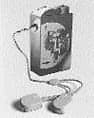
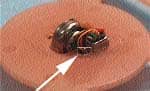
Once the ear impression is received by the manufacturer, the process begins by scanning the impression with a laser optical scanner. Unlike a flatbed scanner/copier used to scan paper documents, the scanner used for virtual impression-taking is a three-dimensional system (Figure 1). The resulting data file, called a point cloud, is the virtual image of the impression (Figure 2). This image is an exact electronic duplicate of the impression, and its accuracy is designed to far exceed traditional physical methods for making the impression investment. This digital image is then analyzed by customized software algorithms to form a virtual model of the shell. The virtual shell is then configured for venting, receiver opening, and component placement (Figure 3). Vents, receiver holes, and similar features can be positioned or repositioned as necessary for optimal component placement and performance to achieve the smallest possible instrument. This virtual shell model is then used as the template to manufacture the actual shell though a process called selective laser sintering (SLS). SLS uses pigmented polyamide (nylon) polymer powder to construct the shell by sintering (ie, melting and fusing) the powder for exact replication of the impression. The shell is built one layer at a time, and this process results in a shell with a textured or stippled surface (Figure 4). This surface texture has a slightly rough feel, which is believed to be one of the contributing factors to better retention of the shells in the ear. The polymer shell material has been shown to be more durable than current shells and is biocompatible.3 Because the data from the scanned impression is stored as a digital file, replacement is simple in the case of loss or damage. If a client loses a hearing instrument, it is possible to order a replacement quickly and easily using the existing stored data. However, depending on the length of time since the original impression was taken, a new impression may be appropriate if the dispensing professional suspects any change in the patients ear canal structure. Assessing the Future of the Virtual Impression Will it be possible to eliminate the ear impression completely? Research efforts are underway on scanning the ear directly as a means to create a virtual impression. It may be possible in the future to eliminate the physical impression, transferring all the necessary patient data directly to the manufacturer via the Internet. However, one possible interim step is a portable desktop LasR scanner that scans the impression in the dispensing office. The data file of the scan is attached to an electronic order form and transmitted to the manufacturer instantaneously, eliminating shipment requirements. Siemens and other manufacturers are now producing a significant percentage of custom hearing instruments using the virtual impression-taking process.
References |
|
|
Featured Jobs
Find a Job |
ADDITIONAL ONLINE RESOURCES |
Featured Employer
|