Issue StoriesA Solution for Telephone Use with a Telecoilby Mark J. Sanford, MS Cell phone interference with hearing aids remains problematic. However, while the telecom industry works out these problems, there are current devices that can help patients use cell phonesand, importantly, other listening devicesthrough the use of a telecoil. Telephones have been used for over a century and have become an integral communication device in peoples lives. During the 1990s cell phone use burgeoned, and this trend has only increased the versatility and need for the telephone. People who are hearing impaired have been limited in their ability to share in this advanced technological boom. Traditionally, they have found that using a telephone can be a frustrating experience.1 Federal legislation was enacted in 1982 requiring that corded telephones be compatible with hearing instruments. The legislation specified that the electroacoustical energy of a telephone must have sufficient induction energy strength for use with hearing instruments.1 The American Disabilities Act of 1990 (ADA) also mandated that telephones be compatible for hearing instrument use. During the 1990s, hearing instrument manufacturers brought both programmable and digital hearing aids to the market. Some of these devices have had programmable telecoils or separate programs/ memories specifically designed for telephone use (ie, an acoustic setting for telephones). However, even with these advancements, telecoil use had still been difficult for the end user, and its not uncommon for emotions to run deep on this issue for both consumers and hearing care professionals.2-6 Particularly when a patients hearing loss becomes more severe, their success on the telephone decreases.1 Not surprisingly, this has resulted in frustration for everyone involved. Telecoils have been offered in both BTE and ITE (usually full shell) hearing aids for many years. Hearing aids equipped with a telecoil have an electromagnetic coil of wire that can be activated by flipping a switch, pressing a button, or even holding a phone close to the device. The microphone on the hearing aid is almost always turned off in the telecoil setting, but there are devices that have the capability to have both the microphone and telecoil on at the same time. Study Methods The System
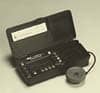
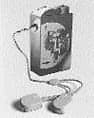
The Hatis Epic, which looks similar to the Freedom Dual and has a slightly larger (3.5 mm) jack, can be used for CD player, stereo, and computer use. The device is reportedly compatible with Walkmans, televisions, radios, CD/MP3 players, computers, and many other audio devices. It can also be used with compatible receivers at theaters, cinemas, and on museum tours, etc. An ITE-compatible device, the Hatis Producer (Figure 1c), was developed for use with any ITC, ITE, or half-shell hearing aid that has a telecoil. The device can be used on the left or right ear, as the device can swivel 180° to fit either ear. All of Hatis devices are designed to eliminate acoustical feedback when using a phone, CD player, stereo, or computer. They also allow the user to make and receive hands-free telephone calls. The Hatis Director (Figure 1d) and Producer devices come with a boom microphone on the headset. Questionnaire and Responses Questions Prior to Use of the Devices 1. Are you able to use your telephone?
2. Can you listen to music through your Walkman CD player, stereo, or computer?
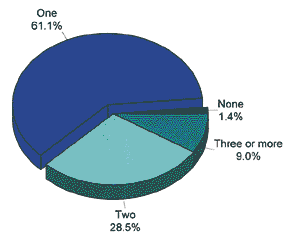
3. Do you own a cell phone?
4. How do you use your cell phone?
5. Please rate the sound clarity of your cell phone?
6. Please rate home or office phone clarity?
7. Rate sound clarity of Walkman, stereo, or computer?
Questions After Use of the Devices 8. Rate cell phone clarity after using Hatis?
9. By what degree did Hatis improve you ability to communicate via cell phone?
10. Rate home or office phone clarity after using Hatis?
11. By what degree did Hatis improve home or office phone clarity?
12. Rate Walkman sound clarity after using Hatis?
13. By what degree did Hatis improve your ability to listen to music?
14. Since using Hatis my ability to communicate by telephone has improved dramatically.
15. Do you use Hatis for business or personal use?
16. How do you rate Hatis product quality?
17. Should Hatis be included with behind-the-ear hearing aids?
18. How interested would you be in a bundled hearing aid package that included a behind-the-ear hearing aid, compatible home phone, and Hatis Freedom and Epic?
19. How interested would you be in this package (BTE, home phone, and Hatis devices) if a compatible cell phone and wireless service were added?
Summary of Results
When using a CD player, stereo, or computer, nearly two-thirds of users (64%) judged sound clarity poor (24%) or fair (40%) prior to using the Hatis device. After using the device, nearly nine in 10 (85%) judged sound clarity on a CD player, stereo, and computer good (37%) or excellent (48%). Users judged their ability to communicate on the cell phone or home and/or office phone substantially improved by 63% and 62% respectively. About three-quarters (73%) of the subjects judged their music listening ability either slightly or substantially improved. The majority of users (83%) judged the product as very high or high in quality. Almost three-quarters (73%) thought that the device should be included with a BTE hearing aid. Eighty-two percent of users were either very or somewhat interested in a bundled kit that would include a BTE, home phone, and Hatis device, while even more (88%) were somewhat or very interested in the bundling of a BTE, home and cell phone, and a wireless service. Discussion Acknowledgement
References |
|
|
Featured Jobs
Find a Job |
||||||||||||||||||||||||||
ADDITIONAL ONLINE RESOURCES |
Featured Employer
|