Issue StoriesStaff Standpoint
The Good and the Bad
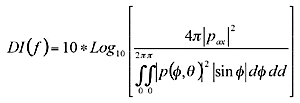
Each year, The Hearing Review conducts a survey that queries dispensing professionals on everything from the staffing of their offices to what kinds of hearing aids they are dispensing. This years results, which appear on pages 22-38, point to a variety of trends that are reshaping the hearing health care field: This Digital Age: Dispensing professionals reported that 58% of the hearing aids they dispense are digital, up from 39% in 2001 and 23% in 2000. Similarly, Hearing Industries Association (HIA) statistics indicate that digital instruments accounted for 53% of all the hearing aids dispensed in the US during the fourth quarter of 2002. Directional Aids: Another exciting trend is the increasing use of directional technology. According to survey respondents, directional instruments were used in 29% of all hearing instrument fittings during 2002, compared to only 22% in the previous year. Dispensing audiologists used directional aids in 44% of fittings. (Be sure to read Andrew Dittberner & Ruth Bentlers article on directional technology and the Directivity Index on page 16 of this issue.) Testing, Fitting, and Verification: Of course, it doesnt really matter if a hearing aid is digital or directional if its still being fit as if it were an non-programmable linear aid. However, signs are encouraging that dispensing professionals are making use of the appropriate tools for testing and fitting hearing instruments. Beyond the air/bone thresholds, word recognition tests, and the MCL/UCL measures that are routinely performed in the vast majority of offices/practices, the survey found that 42% of dispensing professionals are also routinely using speech-in-noise testing. Additionally, more than two-thirds (68%) are verifying the benefit (eg, via COSI, APHAB) of hearing instrument fittings. While its true that the utilization rates for these (and other) tests could improve, it does show that dispensing professionals are using tools that can make a real difference in ensuring customer satisfaction. Pricing: Prices for digital and programmable hearing aids continued to decrease in 2002 by about 10%. The rapid acceptance of digital technology has sparked a new class of economical digital aids and a range of good, better, best digital options. Although costs for some of these hearing aids went down by as much as $300 during 2002, the average price ($1730) paid for a hearing aid and related services continued to rise (by 14%) due to consumers preferences for digital technology. Units Dispensed and Revenues: Business hasnt been easy for many dispensing offices in the past year. In 2002, a typical hearing care office/practice dispensed an average of 30 hearing aids per month, but the median number of hearing aids dispensed was only 20 units per month. When asked if their dispensing volume went up, down, or remained the same during 2002, responses were evenly divided: 36% said their business increased, 35% said their business stayed the same, while 29% said it went down. However, due to the higher prices associated with digital aids and consumers increasing acceptance of this technology, about half (48%) of dispensing offices reported that their gross revenues in 2002 increased by an average of 14%, while 27% said their revenues decreased and 25% reported that revenues stayed the same. First-time customers: The most disconcerting trend remains the incredible shrinking percentage of first-time users of hearing aids. This year, only 41% of those purchasing hearing aids were first-time usersthe lowest percentage ever registered in the HR survey. If anything can be termed a priority for the hearing industry, the professional organizations, and related consumer groups, this is it. We simply have to find a way to get more people to address their hearing problems. Karl Strom |
|
|
Featured Jobs
Find a Job |
ADDITIONAL ONLINE RESOURCES |
Featured Employer
|