Issue StoriesEssentials of Hearing Aid Selection, Part 2: It's in the Numbersby Joel M. Mynders, BC-HIS Hearing aid selection is a critical step in the amplification process. With todays vast array of choices in hearing instrument technology, where do you start? Part 2 of this three-part series examines hearing aid selection by measurement, matrices, and prescriptive formulae. Hearing aid selection is a critical step in the amplification process. With todays vast number of choices in hearing instrument technology, where do you start? Part 2 of this three-part series examines hearing aid selection by measurement, matrices, and prescriptive formulae. Hearing aid selection is a critical step in the amplification process. With todays vast number of choices in hearing instrument technology, where do you start? Part 1 of this three-part series examined the physical, anatomical, and mobility/dexterity parameters, selection of various hearing aid styles, as well as how a Needs Assessment Questionnaire can be used to tailor a hearing aid for a patients lifestyle. Part 2 looks at common measurement techniques, matrix methods, and the prescriptive formulae used in the selection of a hearing aid. It has been said that the goal of all hearing aid selection techniques is assumed to be, principally, to identify the aid which will provide the best speech intelligibility. As stated in Part 1 of this article,1 audiologists have traditionally favored measurement techniques during the process of selecting hearing aids. Much of Part 2 will draw upon the work of many pioneering and present audiologists and engineers who have tackled the problem of hearing aid selection. If you want to see where you are, it is often helpful to review the path that took you there. A brief historical sketch will set the stage for the current situation. The earliest days of hearing aid selection can be traced back to 1926, when Fletcher2 described materials to select hearing aids in a paper presented to the American Federation of Organizations for the Hard of Hearing. This was followed in 1936 by Knudsen & Jones3 who proposed the use of speech to assess hearing aid benefit. Although West4 and colleagues made impedance measurements applicable to supra-aural earphones in the late-1920s, the concept of mirroring the audiogram is generally credited to him around 1937. In 1940, Watson & Knudsen5 presented the idea of most comfortable loudness (MCL) levels being the position for optimum hearing aid fitting. Their proposal was to measure the MCL for a 1000 Hz tone. Then they used loudness matching at 250 Hz, 500 Hz, 2000 Hz, and 4000 Hz. This is an adaptation of finding Equal Loudness Contours, except it uses audiometric measurement rather than 0.0002/dynes per square centimeter. Current loudness procedures find their origin here. World War II slowed continuing new efforts at hearing aid selection. However, at the end of the war, Carhart6 described a comparative selection procedure based on speech audiometry. The Carhart Methods goal was to select the hearing aid that would provide maximum benefit using the following measures:
In the Carhart Methods protocols for selection, the fitting selected could be based on only one of the above measures. In practice, over the years, clinicians considered speech discrimination to be most important. It should be noted that the Carhart Method does not attempt to correlate the psychoacoustic tests to the electroacoustic performance of the hearing aids. The selection procedures described earlier actually did focus on hearing loss and hearing aid performance. The Harvard Report7 followed earlier researchers of hearing aid selection by focusing on degree and slope of hearing loss and hearing aid performance. In 1960, Shore, Bligh & Hirsh8 challenged the Carhart comparative methods. The researchers concluded that the reliability of the measures were not enough to warrant the investment of clinical time in selecting hearing aids. Although the Carhart Evaluation suffered the inevitable slings-and-arrows of scientific progress and discourse, much of Dr. Carharts writings were prescient, covering a good deal of what we now consider to be the fundamentals of a modern hearing aid fitting. Wallenfels9 in 1967 returned to correlating audiological test data and hearing aid performance as the best approach. His focus was to select the frequency and gain characteristics of hearing aids for his patients. His theory is called Bisection. Bisection is selective amplification in which the region between the threshold of hearing and the threshold of loudness discomfort is divided in half, and the gain of the appropriate hearing aid brings speech to this bisection level. The actual procedure was to bisect the audiometric threshold and the audio matrix tolerance score from 1000 Hz to 4000 Hz. In practice, this method required exceptions for different slopes. Wallenfels goal was maximum speech intelligibility. At the time, no other supportive research was done on this method. In summary, from 1920 to 1970, several hearing aid selection techniques were developed which fall into the categories of prescriptive or comparative methods. Comparative methods were found hard to verify. However, many hearing aid clinicians in private practice continued to use comparative methodologies. Audiologic researchers focused on variations in speech test stimuli to see if greater repeatability could be achieved using comparative methods. For example, Zerlin10 used subjective quality judgements of a hearing aids effectiveness. Many private-practice hearing aid specialists had pragmatically come to this methodology as well. Thus, another method of selecting hearing aids was createdsubjective sound quality (this is covered in greater detail in Part 3 of this series). From the 1950s through the 1970s (and even 1980s), word lists assumed great importance in the selection process, especially for audiologists. Generally, CID W-22 or NU-6 word lists were presented in a sound booth for each hearing aid, and the (monaural) hearing aid with the best score was chosen. In an excellent retrospective article, Hawkins11 has labeled the above periods as the Carhart Era and the Let the Word Lists Select the Hearing Aid Era. The dependence on word lists diminished as hearing care professionals came to realize that single words presented in a sound-proof booth were not necessarily indicative of real-world listening performance. Additionally, a paper by Thornton & Raffin12 showed that two speech discrimination scores had to be quite different before they could be considered statistically significant. Since the 1970s, the avenues of pursuit for hearing aid selection have included: Many, many prescriptive fitting methods; comparative protocols using speech in quiet and/or speech in noise; tolerance issues (MCLs, UCLs, etc); aided soundfield techniques using various stimuli; master hearing aids; sound quality judgements; probe microphone fittings; acoustic reflex fittings; brainstem fittings, and combinations of these multiple techniques. The reader is encouraged to consult the literature for details on all these various attempts to find the method for hearing aid performance. Modes of Amplification
The majority of patients requiring amplification will be those for whom the monaural versus binaural selection will be the main question. Hearing aid literature of the past 10 years affirms the regular application of binaural hearing aids if the audiological analysis confirms the existence of usable (impaired) hearing in both ears. Auditory deprivation studies have reported significant loss within 7 months to 2 years in ears that have not been fitted with hearing aids. The CROS family of hearing aids in most of their applications focus on the head-shadow effect. The exception is the IROS (ipsi-lateral routing of signals). This application is an open-mold fitting which uses maximum venting as its tactic for improving word recognition. There is also a transcranial CROS which employs the crossover effect of high levels of sound applied to one ear. In selecting the mode of amplification, the clinician should recommend the preferred mode. If the patients preference does not correspond to the recommendation, the clinician should describe the boundaries and rationale for the recommended mode. The goal of rehabilitation and regular use of amplification should be kept forefront by the clinician during the hearing aid selection process. Remember, if the patient totally rejects your recommendation, there will be no aural rehabilitation. (See Part 1 of this article for a more detailed discussion on appropriate styles and the physical needs and preferences of users.) After the mode of amplification has been selected by the clinician and accepted by the patient, a second selection by measurement area comes into focus: What should the electroacoustic performance parameters for a given hearing loss be? Matrix Methods What is a matrix? The dictionary definition is that within which, or within and from which, something originates, takes form, or develops. At the fundamental level, the basic parameters of a hearing instrument fitting are gain, output, frequency response, and time. Other parameters in more advanced hearing instruments include cross-over frequency, attack and release times, and kneepoint. Generally speaking, when working on a matrix at the labs or in dispensing offices:
The so-called Matrix Method employed by hearing instrument manufacturers has traditionally been the most popular method used in the US for custom aid selection. But are these matrix methods used by the labs uniform? Is the same matrix used from lab to lab? The answer to both questions is no. Current selection methods might be best divided into two categories:
The current matrix programs of various labs are classification systems for determining various performance parameters, including:
The laboratories each have developed their own fitting matrices that are proprietary and are usually published and/or contained within software systems. These publications usually include curves, but generally not the entire matrix system. The laboratories take the audiologic data supplied by the dispensing professional via puretones by air conduction and speech tests. Some labs report that it is still frequent that no MCL and UCL scores are provided by dispensing professionals! In these cases, the lab is forced to estimate the scores using normative data (which is hardly an optimal alternative). Each lab takes one or several of the various prescriptive methods and modifies it based on their internal experiences with their matrices. Internal experiences include the amplification strategy of the companys audiology and engineering departments, the disposition of the shell lab relative to tight or loose slit-leak vents, and even how a lab stuffs its components. The selection of the SSPL-90 characteristic is usually based on the dispensers derived UCL score. One lab technique is to take the UCL score obtained from an audiometric speech score (eg, with headphones) and convert it to SPL that relates to 2cc hearing instrument volumes. Once this score is obtained, the matrix system at the lab will add, for example, 20 dB SPL (eg, a UCL-converted score of 90 dB SPL + 20 dB SPL= 110 dB SPL). The matrix system software then scans the circuit options that closest approach this 110 dB figure. The selection of gain is determined by several methods. One laboratory uses the MCL scores which are then converted from HL to SPL. Some labs use peak gain, and others use a computer-driven HF Average Gain figure. Examples of some of the variables/adjustments on the gain derived by the different laboratory matrix methods include: new user or experienced user (experienced users are usually given more reserve gain); monaural or binaural (binaural users get less gain); conductive and mixed losses (get more gain); ITC and CIC instruments (get less gain and output compared to ITE fittings); and ITE fittings (get less output than the BTE fitting that the client may have previously used). The point is that each labthrough its interchanges and communications with its dispensing professionalshas learned of modifications for specific fittings that they will include within their matrix. Shaped frequency responses are selected in the matrix systems using puretone audiometric data supplied by the dispensing professional. For a flat loss, a common matrix choice might be 10 dB-15 dB slope. For a precipitous ski-slope loss, special microphones which significantly cut low-frequency response may be selected by the matrix system. The options the matrix offers for frequency response are a range of slopes, choice of peak locations and overall bandwidths. The final major option the matrix selects is the hearing aid venting. The choices are exact-diameter vents (with selection based upon earmold measurement literature), variable vent plugs, and various IROS opening sizes. The IROS venting size will be limited by the size of the concha bowl and ear canal, as determined by the patients impressions. Additionally, the dispensers selection of the circuit options have to be individually entered into the matrix system. Terry Griffing has lectured about hearing instrument matrices, arguing for a whole range of expanded matrix items for incorporation into the selection process. In addition to the ones described so far, his list included use gain, length and shape of the ear canal, personality factors (eg, introvert vs. extrovert), and the age of the client. These matrix factors are an important part of a good fit for all patients, even though this information is usually not passed along to the lab (or used by the lab). Ongoing research on factors such as personality and lifestyle may yield higher levels of customer satisfaction in the future. So, the facts are that laboratory matrices have provided fittings for large numbers of clients, and a number of returns are certainly due to faulty matrix decisions. The question posed is, How much should the dispensing professional be directly involved in the selection of the electroacoustic performance characteristics since, in most cases, it is derived by a computer software function? There is, at present, limited published data on where the problems can be found within the existing matrix systems. In the past 10 years, more and more specific laboratory matrices (again, usually in the form of software or specs) are provided to dispensing professionals if they want to perform the selection themselves. The clinical (in contrast to laboratory) matrix selection for custom hearing instruments is influenced by training and experience, real ear measurements, prescriptive formulas, and the audiogram or specific patient history. Lab decisions about clinical matrix selection suggest that large numbers of dispensing professionals let the lab do the selection. If the hearing care professional is going to select his/her own matrices, they generally do the following (see Part 1 of this article for points #1 and #2):
With the advent of so many new circuit designs in nonlinear devices, dispensing professionals are getting involved in matrix selection. In numerous lectures, Robert Briskey provided some observations about matrix fittings that deserve reiteration:
Because many of us enjoy cookbook solutions, it may be possible to offer some pointers about matrix selection, as long as the reader recognizes that these are extremely general guidelines:
Finally, it should be noted that research supports the use of directional microphone technology. In general, hearing aid users may require a signal-to-noise (SNR) improvement of 2-18 dB, and it is now generally accepted that most directional systems can improve SNRs by 4-7 dB. This suggests that, while they may not be perfect, directional hearing aid systems can be extremely valuableespecially for those patients who often find themselves in listening environments where competing signals can pose a challenge. Prescriptive Fitting Formulae
A sample of more current linear prescriptive formulae in use within dispensing offices is listed at the top of Table 2. At the risk of oversimplifying each method, a brief description of the current prescriptive formula is in order. (Authors Note: For detailed descriptions of these formulae, the reader is referred to the original sources in the references.)
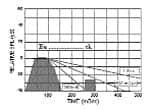
The Berger Method14 is based on the assumption that gain should provide average conversational speech levels. The procedure also reduces low frequencies, boosts gain according to loss, and tries not to over-amplify the signals. The Libby One-Third Gain Rule27 is based upon the idea that gain requirements for mild-to-moderate losses are better targeted with a 1/3, rather than 1/2, gain rule. The NAL-R Prescriptive Fitting Formula20 might be envisioned as a complex series of calculations that, in practice, resembles a half-gain rule combined with a one-third slope rate. The goal of the NAL is to maximize speech intelligibility at the listening level preferred by the patient. Intelligibility is assumed maximized when all bands of speech are perceived to have the same loudness (ie, loudness equalization). The NAL formulae have changed over the years, and NAL is probably the most-utilized fitting method in the world. A major reason for this choice by clinicians is the large group upon whom the procedure was validated. The POGO II Procedure26 builds on the original POGO (prescription of gain/output) which is a half-gain rule with correction factors for low frequencies. The POGO II modifications are changes for losses greater than 65 dB, and the addition of UCL measures at 500 Hz, 1000 Hz, and 2000 Hz for output targets. As audiologic knowledge increased, prescriptive techniques began to focus more on speech intelligibility, comfort and dynamic range, loudness normalization or equalization, and even temporal aspects of nonlinear hearing aids (Figure 2, bottom). Thus, the history of prescriptive hearing aid formulae track expanding hearing aid technology. It is noteworthy that, in less than 10 years, many of these methods have been incorporated into the fitting software and are routinely used to program hearing aids. The IHAFF Protocol29 uses VIOLA software that calculates the input-output curve based on a Contour test developed by Cox et al.33 (a loudness normalization method). It seeks to make soft sounds be perceived as being soft, average sounds average, and loud sounds loud but comfortable. The FIG6 Procedure27,28 is a fitting formula that can be added to an array of other prescriptive fitting formulae. Through the use of hearing threshold data, FIG6 prescribes the gain required to normalize loudness for input levels of 40 dB, 65 dB, and 95 dB SPL. To do this, it uses loudness data averaged across a large number of people with similar degrees of hearing loss. DSL[i/o]30 presents a device-independent formula to provide an ideal amplified output for a range of input levels. It uses real-ear aided gain (REAG) to provide users with audible, comfortable signals in each frequency region. This is probably the most popular fitting formula for use with children. NAL-NL131,32 extends the NAL-R fitting strategy for nonlinear aids, providing different prescriptive targets as a function of input levels. Unlike other nonlinear strategies, it does not attempt to normalize loudness at various frequencies, but instead concentrates primarily on maximizing speech intelligibility. Proprietary Selection Techniques Next in this series: Part 3: Perception IS Reality: Hearing Aid Selection by Perception and Paired Comparisons.
Acknowledgements Correspondence can be addressed to HR or Joel Mynders, AP Mynders & Associates, Inc, 129 North Church St, West Chester, PA 19180. References |
|
|
|
ADDITIONAL ONLINE RESOURCES |
|