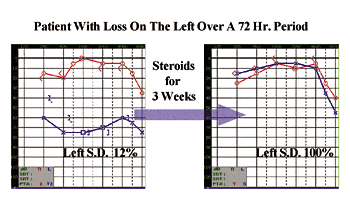
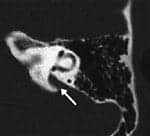
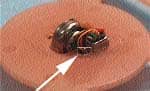
Issue StoriesThe Diagnostic and Treatment Dilemma of Sudden Sensorineural Hearing Lossby Jack J. Wazen, MD, and Soha N. Ghossaini, MD One of the keys to assisting the SSNHL patient is to understand the diagnostic and treatment pathways for the patient. This article looks at the evaluation, management, natural history, and rehabilitation of the SSNHL patient Sudden sensorineural hearing loss (SSNHL) poses a diagnostic and therapeutic dilemma. Identification of the probable cause of SSNHL must be undertaken to provide the appropriate treatment. The evaluation includes a comprehensive history, physical examination, complete audiological evaluation, and laboratory and radiographic studies. While some patients recover spontaneously or in response to treatment, many others are left with a degree of hearing loss and tinnitus with an associated perceived handicap. Therefore, it is vital that the complete management of patients with SSNHL include audiological rehabilitation. Sudden sensorineural hearing loss (SSNHL) is defined as a loss greater than 30 dB in three contiguous frequencies, occurring over a period of less than 3 days. The hearing loss could be noticed instantaneously, more commonly on awakening in the morning, or could rapidly develop over a period of hours or days. The hearing loss is variable in severity and is usually unilateral, although bilateral involvement up to 4% has been reported.1 Tinnitus has been reported in 70% of patients with SSNHL. Vertigo is also present in 50% of cases. The incidence of sudden sensorineural hearing loss has been reported to be 5-20 per 100,000 person per year1 and accounts for 1% of all sensorineural hearing loss cases.2 Males are equally affected as females. The average age at onset is 40-50 years1 with the majority of patients over 40 years old. The incidence appears to increase with age2: 4.7 per 100,000 in patients 20-30 years old, and 15.8 per 100,000 in those 50-60 years of age.1 Etiology of SSNHL About 1-15% of patients with an acoustic neuroma will present with sudden sensorineural hearing loss as the initial symptom.1,2 The hearing loss is thought to be due to a vascular compromise from an acute hemorrhage into the tumor. Circulatory disorders including vascular and hematologic diseases such as leukemia, sickle cell anemia, macroglobulinemia, and polycythemia are mentioned as possible causes of SSNHL. The pathogenesis in such diseases is thought to be vasospasm, thrombosis, embolism, and acute hemorrhage into the inner ear, but the pathological evidence for this point of view is still lacking. Trauma to the inner ear whether physical, acoustic or barotrauma, can cause sudden deafness secondary to a perilymphatic fistula or cochlear membrane breaks. Other important considerations in the differential diagnosis of patients with SSNHL are infectious causes. The list here is long and could include any pathogen. However some pathogens are implicated more than others because of their known pathologic effect on the inner ear such as syphilis, mumps, measles, herpes zoster, and adenovirus. Meningitis is a well recognized cause of SSNHL with possible spread of the pathogen into the inner ear and/or internal auditory canal; neuritis of the cochlear nerve; septic emboli to the vertebrobasilar system; or central auditory pathway dysfunction. Certain metabolic diseases such as diabetes and thyroid diseases may lead to compromise of blood flow to the inner ear secondary to vascular occlusion. Neurologic disorders such as Multiple Sclerosis, a demyelinating disorder of the central nervous system, may occasionally present with SSNHL. Autoimmune inner ear diseases could present with SSNHL although more typically they present with a rapidly progressive bilateral sensorineural hearing loss. The diagnosis is usually supported by the presence of other immune-related signs or symptoms and by positive serological testing. Cochlear pathology such as endolymphatic hydrops may present with SSNHL. Patients usually complain of associated aural fullness, tinnitus, and possible vertigo. Evaluation From that point on it is the responsibility of the health care provider to ensure the patient is getting the appropriate work-up and management. A detailed history is crucial in patients with SSNHL. Perilymphatic fistula or inner membrane break should be considered in patients where history of trauma or physical exertion could be elicited. Menieres disease is considered whenever associated vertigo, tinnitus, or aural fullness is described. Autoimmune etiology is likely in patients with bilateral SSNHL that develop within a short period of time or in patients with known autoimmune disorders. History of a viral prodrome or fever may point toward infectious etiology. A past medical history of ototoxic medications, circulatory, or metabolic disorders should be obtained. On physical examination, the ear exam might reveal cerumen impaction but is usually normal. A complete Head and Neck exam by an otologist is essential. A neurotologic examination including the cranial nerves, gait assessment with a Romberg test Tandem gait and the presence of nystagmus should be performed in an attempt to rule out other neurological and neurotological disorders. The audiological work up of patients with SSNHL should include pure-tone audiometry, speech audiometry, tympanometry, and acoustic reflexes in an attempt to confirm the diagnosis of and to determine the degree of sensorineural hearing loss. Otoacoustic emissions could be helpful in the diagnosis and follow-up of patients with SSNHL. Their presence at any time during recovery was found to correlate with good prognosis.3 Electronystagmography (ENG) is indicated in patients who have associated dizziness or vertigo. Magnetic resonance imaging (MRI) of the brain and the internal auditory canals with Gadolinium enhancement is needed to rule out an acoustic neuroma, other brain tumors, and multiple sclerosis. Laboratory studies are of value to rule out potentially treatable causes of SSNHL including syphilis, Lyme disease, metabolic, and circulatory disorders. This includes a complete blood count, electrolyte panels, serologic testing for syphilis, lyme disease titer, and autoimmune testing which might include the western blot immunoassay. Natural History Management However, the treatment of idiopathic SSNHL remains controversial; over the years, this has ranged from no treatment to the use of systemic steroids (for more information, see the article in this issue by Halpin & Rauch), antiviral medications, vasodilators, and carbogen therapy alone or in combination. The basis for these treatment options is hypothetical and evidence is lacking due to the absence of well-controlled studies. Vasodilators are thought to increase blood flow to the cochlea. Carbogen therapy is thought to increase the oxygen supply to the perilymph secondary to vasodilatation of the inner ear. Antiviral therapy in patients with SSNHL has been used with variable results.4 The use of antivirals in sudden sensorineural hearing loss is based on histologic and epidemiologic evidence in support of a viral cause in some cases of sudden sensorineural hearing loss. High doses of oral steroids are the most widely accepted mode of therapy of SSNHL. In a recent study, Chen et al.5 showed the effectiveness of steroids in the treatment of SSNHL. In the absence of contraindications to the use of steroids, Prednisone 1 mg per Kg per day is usually initiated for a period of 2 weeks. If a favorable response to steroids is noted subjectively or audiologically, therapy is continued for additional 2 weeks, after which they are tapered slowly. Intratympanic steroid injections (dexamethasone or methylprednisolone) are being currently used in patients where systemic steroids are contraindicated or in patients who fail to respond to oral steroids. In this procedure, steroids are perfused or injected into the middle ear and absorbed into the perilymph via the round window membrane. Animal studies have shown a higher perilymph concentration of steroids when installed in the middle ear as compared to the systemic use.6 Clinically, the success rate of intratympanic steroids is variable and its effectiveness in SSNHL has not been established by clinical studies. Rehabilitation In the past, rehabilitation of patients with unilateral sensorineural hearing loss was limited to the use of contralateral routing of signal (CROS) with reported mixed satisfaction, and most patients were left unaided. Recently the Food and Drug Administration has approved the use of the bone anchored hearing aid (BAHA) in patients with unilateral sensorineural hearing loss. The BAHA is a cochlear stimulator that transmits auditory stimulus via bone conduction to the contralateral cochlea.7 This requires the implantation of a 4-mm titanium fixture in the postauricular area on the side of the hearing-impaired ear. Three months later, following osseointegration, the audio processor is ready for use. The efficient direct transfer of the auditory stimulus throughout the skull and to the contralateral cochlea with minimal attenuation of the signal makes the BAHA an ideal CROS system. Its percutaneous design with lack of skin and subcutaneous tissue interface, the absence of a fibrous capsule around the implant, and the power of the processor are critical to its success (see article by Miller & Schein in this issue for further discussion of rehabilitative aspects of SSNHL). Conclusion To date, numerous treatment modalities have failed to show response rates beyond the spontaneous recovery rate. The most universally accepted treatment of SSNHL is the use of steroids, but the dose, duration, and method of treatment still need to be fully elucidated (see article by Halpin & Rauch in this issue for further discussion on the use of steroids). The solution will only come from multicentered well-controlled studies comparing different treatment protocols.
References Correspondence can be addressed to HR or Jack J. Wazen, MD, 364 East 69th St, New York, NY 10021; email: jjw4@columbia.edu. |
|
|
Featured Jobs
Find a Job |
ADDITIONAL ONLINE RESOURCES |
Featured Employer
|