Issue StoriesDirectional Benefit for Listeners with Severe-to-Profound Hearing Lossesby Jürgen Tchorz, PhD, and Birgitta Gabriel, PhD A study shows that directionality provides substantial benefit in noise to those individuals who may need it most. Directional microphones are the means of choice for improving speech intelligibility in noise, which is the largest improvement sought by those wearing hearing aids.1 In fact, directional microphones provide the only verified method of improving speech intelligibility in noise with hearing aids (see Killions article2 in the February edition of The Hearing Review for an excellent review). The greater the hearing loss, the greater is the need for additional support in noise. While directional microphones are available in a wide range of hearing instruments for moderate-to-severe losses, there is a lack of directional power hearing aids. Accordingly, there are only limited data on the directional benefit for clients with severe-to-profound losses. Thus, a clinical trial was conducted to assess the performance of a modern digital power instrument with directional microphones in subjects with severe-to-profound hearing losses. Assessing Directional Benefit
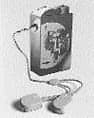
The subjects were fit with Phonak Supero 413 AZ power instruments. Most of the fittings (18) were bilateral. The hearing aids were adjusted to NAL-RP which was verified in a 2cc coupler. The signal processing was set to Super Compression. Noise canceller and feedback canceller were switched off to avoid any interference with the test signals and to allow for isolated assessment of the directional microphones. The adaptive Oldenburg Sentence Test3 was used for speech testing in noise. The speech was presented from the front, and the noise signal from behind (180°). The speech level was fixed at 65 dB SPL. It was verified that all subjects had at least 80% speech understanding in quiet with the test material when presented at 65 dB SPL. This was to ensure that any poor performance in the test was actually caused by interfering noise, and not by insufficient audibility. The noise signal was unmodulated and had the same spectrum as the long-term spectrum of the speech material. The level of the noise was adapted to result in 50% speech intelligibility. The test was conducted with omnidirectional microphones and with directional microphones in randomized order. Apart from directionality, there were no other differences in the hearing aid settings in the two conditions. Results and Discussion
The average directional benefit (ie, the difference between both conditions) is 7.9 dB. This corresponds to a substantial improvement in speech understanding, as the slope of the intelligibility function in the test used is about 17% speech intelligibility improvement per dB.4 These findings are in line with previous studies on directional microphones in subjects with moderate-to-severe hearing losses which report average directional benefits between about 4-8 dB.5 A question with high relevance in clinical practice is whether the perceived directional benefit is determined by the individual (high-frequency) hearing loss. In other words: Does the audiometric configuration predict candidacy for directional microphones? Analysis of the data revealed that the individual directional benefit was, in fact, not determined by the amount of high-frequency hearing loss. This is illustrated in Figure 3.
This finding amends previous studies in listeners with less severe hearing losses6 which also revealed no significant predictive relationship between directional benefit and high-frequency hearing loss. In conclusion, directionality provides substantial benefit in noise also to those hearing-impaired individuals who need it the most: the ones with severe-to-profound losses.
References |
|
|
Featured Jobs
Find a Job |
ADDITIONAL ONLINE RESOURCES |
Featured Employer
|