Issue StoriesPhysical Therapy for the Ears: Maximizing Patient Benefit Using a Listening Retraining ProgramThe Listening and Communication Enhancement (LACE) system, created by UCSFs Robert W. Sweetow, PhD, and colleagues, is an interactive tool that provides listening retraining via home computer or TV. Weve all seen the television ads. A hard-bodied, tan, oily Adonis and Diana, each with 6-pack abs and more muscles in their shoulders than most of us have in our entire bodies, are working out on a contraption that looks like the result of an insane engineers mating of a crossbow with a medieval torture device. As these bumpy muscled athletes flex and strain against the machine, a voice-over keeps repeating the catch-phrase: 30 minutes a day, five days a week to a better body. Although its unlikely you will be handing out body oil and tanning booth tickets to your patients any time soon, your future may include the phrase 30 minutes a day, five days a week, for four weeks to better hearing if a new aural rehabilitation tool called Listening and Communication Enhancement (LACE) becomes a fixture in dispensing offices. LACE is the creation of Robert Sweetow, PhD, and Jennifer Henderson-Sabes, MA, at UCSF, as well as software engineers Gerry Kearby, Earl Levine, and Rob Modeste at NeuroTone Inc, Redwood City, Calif. This article examines the new, interactive tool which is designed to provide listening retraining via a patients home computer (and soon a hard-wire interface to the television) as a supplement to their in-office aural rehabilitation (AR) program. AR is What We Do Perhaps more than the actual hearing instrument fitting, technology, or comfort issues, it is counseling and aural rehabilitation that are the prime elements of customer satisfaction. Indeed, it has been put forth by Weinstein1 that the one crucial feature that elevates audiology above being a specialized field of laboratory science for medicine is the necessity of aural rehabilitation and the dispensing of hearing instruments. Aural rehabilitation requires that the dispensing professional becomes an independent case manager. And this, in turn, means that providing exemplary counseling services for the patient is a prerequisite of any quality hearing health care program. However, there are at least four problems in providing ideal hearing care services to the typically diverse population of patients served by hearing care professionals: 1) once an individual leaves your office with his/her hearing aids, you are no longer there to counsel them on a daily basis; 2) the progress they make (eg, outside the dispensing office and/or a group AR program) can largely be defined as self-rehabilitation because patients develop (or dont develop) their own adaptation skills to cope with challenging listening situationseven with the most diligent audiological help, they must adjust to their hearing instruments on the fly in a wide range of settings; 3) up until now, there have been no programs available that help people make use of those parts of speech they can access only with difficulty (eg, fragmented speech either with or without a hearing aid); 4) many people who have suffered with hearing loss for an extended period of time (eg, 5-10 years) lack confidence in their communication skills and may need positive reinforcement to stay on the path to better hearing. Hearing is Not Necessarily Listening What is the purpose of the system? We dont hear with our ears; we hear with our brain. Hearing instruments can help a person detect softer sounds that were previously inaudible to them, but they dont necessarily provide good listening skills or retrain the brain to access information presented within the newly audible information. Good listening skills are one of the components essential for effective communication. Other components include rapid thought processing, auditory memory, use of language skills, and interactive strategies. In addition, confidence that what you thought you heard was in reality what was spoken, is vital. Spontaneity of expression and unexpected statements make life interesting; they are the essence of humor and intellectual exploration. However, the ability to discern what was said can be deteriorated both by hearing loss and by the natural aging process. LACE is designed to enhance the ability to communicate by training the brain to better utilize these skills. Thus, the objectives of LACE are:
How It Works Degraded speech. For degraded speech exercises, LACE presents either time-compressed speech to simulate a person who talks fast, or it presents speech with background babble noise or a single competing talker (including that of a male, female, and child). The patient listens to and identifies the signal, then sees the correct response on the screen. If the message is correctly interpreted, the next sentence is then presented at a slightly more difficult level; if the message is misinterpreted, the next sentence is presented at an easier level. In other words, the difficulty level of the task is based on the accuracy of the patients response to the previous task. Cognitive skills. The system provides stimulating training exercises to enhance auditory memory and speed of processingtwo elements of listening that are particularly important in noisy environments. These exercises take the form of a missing word in a sentence that is filled in by the patient, or asks the person about words preceding or following a target word in the sentence (eg, see the question on the screen in Figure 1).
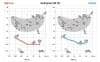
Communication strategies. LACE also presents and demonstrates strategies that help people who are hard of hearing cope in their daily communication activities. These include tips on asking where to be seated in a noisy restaurant, advice on telephone use, and communication tips for the patients and their friends and loved ones. Patients are asked to work through the program, which ideally takes 30 minutes per day, five days per week, for four weeks to complete (10 hours total), but is specifically set up to let the patient progress at his/her own pace. Besides the immediate feedback given for each task, LACE provides the patient and dispensing professional with a graph (Figure 2) depicting daily improvement and progress from the start of the training program. This is also designed to encourage the patient and to give them a boost in confidence. It also reasserts the value of their choice in obtaining amplification (in the case of a hearing aid purchase).
The results of the training are tracked by the software, and the data can be electronically transmitted to a HIPAA-compliant secure Web site which is accessible by the hearing care provider. In this way, the patients progress can be monitored, and individualized recommendations can be made as he/she uses the program. Additionally, any need for subsequent modifications in the training can be implemented. Practical Aspects The LACE software is currently available on a CD disk. However, future versions of the program will feature a hardware interface that plugs directly into a television set. In the future, it may become available on a portable device for patients who dont own computers. A five-minute video that portrays the video from an audiologists perspective is available and more information on the system can be obtained at the NeuroTone Web site (www.neurotone.com).
References |
|
|
Featured Jobs
Find a Job |
ADDITIONAL ONLINE RESOURCES |
Featured Employer
|