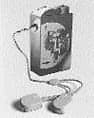
Issue StoriesEnvirograms: Bringing Greater Utility to Dataloggingby Mark C. Flynn, PhD A new tiny device called the Envirometer has been developed, allowing the collection ofinformation on ones listening environments prior to the selection and use of the hearing aid. Recent reports1,2 have shown the dramatic performance gains that hearing technology has made in the past couple of years. A key challenge to the hearing care professional is how to demonstrate the benefits of this technology to an increasingly educated and informedbut often skepticalconsumer. The development of computerized counseling tools has no doubt helped and facilitated counseling on various hearing care issues (eg, binaural benefit), technology (eg, directional benefit), and practical aspects of hearing instrument selection (eg, hearing aid styles and color options). Similarly, various live tools are increasingly popular for demonstrating the benefits of amplification and how the numerous technologies (eg, directional microphones) provide real-world benefits. While all of these advances are important and have been well received by consumers, it can be argued that these solutions are still too generic; they are not necessarily aimed at the specific, individual benefits afforded for a clients real-world experiences. Datalogging has furthered our understanding of hearing instrument technology, its applications, and allowed us insights into how clients use their hearing aids.3 Unfortunately, while the information generated via datalogging is interesting (eg, volume control adjustments), it is often limited in terms of benefit for both the professional and the client. One recent audiological paradigm shift is the recognition of the important relationship between the client and his/her auditory ecology.4,5 Gaining detailed knowledge about the clients actual communication environments is perhaps the best way to make datalogging truly useful. Datalogging offers much more than just an automated fine-tuning guide; it represents an insight into the clients world. It is important to recognize that good hearing is as much about the listeners environmentand how important each of these environments is to the listeneras it is about the ability to hear. After all, if a client has purchased the hearing instrument specifically to hear better in one or more situations, he/she will be disappointed with the device if it fails to live up to expectations in these situations. Envirometer: A Tool to Facilitate User Acceptance
A Tool for Understanding the Clients Acoustic Environments
FIGURE 2. Data from the Envirogram demonstrating the information that can be obtained in terms of both a level distribution and also a classification of the types of listening situations. The system provides the hearing care professional with actual and reliable knowledge about their clients auditory ecology. Decisions can therefore be made on actual data rather than averages or subjective client reports. The ability to systematically map out and display each patients listening environment is what makes datalogging truly useful. Information is logged about the communication environments of a client, including the intensity levels and environment characteristics (eg, the amounts of speech-in-quiet vs speech-in-noise situations). Similarly, actual information about how systems such as Multiband Adaptive Directionality and TriState Noise Management have operated in different situations is available (Figure 3). This allows the dispensing professional to immediately see and demonstrate the benefits that Artificial Intelligence provides.6
FIGURE 3. The Syncro Activity Analyzer produces Envirograms that demonstrate the hearing instrument is able to select between multiple directionality states and choose the best response. Integrating Envirograms into Your Fittings
The Envirogram further enables the hearing care professional to understand how a hearing instrument will benefit the client in their actual listening situations. The focus on auditory lifestyle allows the freedom to shift away from discussing the pathological aspects of hearing loss. Focus is now redirected to how the hearing instrument can benefit the clients actual listening environments. The Envirogram illustrates the variety of environments the client encounters and allows discussion of the importance of listening in all these situationsespecially those that pose the most difficulty. The use of the clients own listening data facilitates understanding of benefit and allows the client to take ownership of his/her hearing problem. This, in turn, increases the likelihood the patient will accept the recommendations of the dispensing professional, particularly when recommending advanced technology that offers benefits over their existing hearing aids. More specifically, the client can view how and when various automatic features are activated in different situations. These can be used to demonstrate to clients that these advanced features are actually benefiting them, and to reassure that they experience a wide range of communication situations. Similarly, some clients seek reassurance that their hearing instruments are performing appropriately, and Envirograms are a good way to show them that various listening enhancement features are being engaged properly within the instrument. At a more detailed level, our clinical experiences suggest the following process to be beneficial for the client in showing how hearing technology can work to enhance their lifestyles:
Figure 4 shows an example, whereby the client has expressed difficulty listening in a noisy environment. The dispensing professional reads the Envirogram from Oticon SAM and, referring to the environmental data collected, discusses each of the various listening situations. Finding out that listening to colleagues on the subway is an especially difficult situation, a sound sample is selected that approximates this listening situation. The hearing instrument is then connected to Syncro Live so that the client views how technology, such as a directional microphone, automatically engages during this situation. This type of counseling tool allows for a greater amount of focused discussion regarding the benefits of the hearing aid technology.
FIGURE 4. Representation of the Envirogram indicating the speech in noise situation with the actual display from Syncro Live showing that, in this situation, the hearing instrument would be in directional mode to provide the best possible speech-over-noise ratio (SpNR). An Envirogram assists in the fitting process through highlighting aspects of a clients experiences that may lead to fitting difficulties or in reaching their full potential with the hearing instrument. For instance, we have confirmed the anecdotal observation that a number of new users avoid certain auditory environments. This suggests that, during the hearing instrument fitting process, extra counseling is required to encourage the client to reconsider difficult listening situations and give them another try. Similarly, it is crucial to determine whether the clients auditory ecology following fitting is consistent with the clients chosen lifestyle or if this is aversion due to difficulty with hearing which will be resolved with the wearing of premium hearing instruments. In this situation, comparison of the pre-fitting SAM Envirogram with the post-fitting Syncro Envirogram proves useful. The Envirogram, as measured by the envirometer in SAM, has the capacity to assist the pre-fitting counseling and selection of a hearing instrument. It is designed to allow the dispensing professional a unique insight into the way a hearing instrument operates for the client in their day-to-day life. Similarly, both the hearing care professional and the patient can examine how the hearing instrument operates and the potential benefits provided before it is actually worn. This enables the patient to gain a greater sense of awareness about the fitting process and the benefits that can achieved with todays latest hearing aid technology. Incorporating Envirograms in the Fitting Process Instrument selection. You can use the Envirogram in the selection and comparison between products. For example, the patient can directly see how systems are driven by the listening enhancement features, providing real benefit for them in challenging listening situations. Preparing for the fitting. At the initial appointment, the audiogram and impressions are often taken. Traditionally, there has been little for the client to do before the earmolds or ITEs return from the lab. Oticon SAM provides a unique opportunity for the client to wear SAM in their daily life before they obtain the hearing aid. In this way, the client is fully engaged and committed to the hearing instrument fitting process immediately from the outset. In essence, they are becoming attuned to their listening situations along with the SAM device. When they return for the actual fitting, the dispensing professional has valuable information about his/her auditory ecology which, in turn, provides a better understanding of how the hearing aid may benefit the client. During the fitting. You can use the results shown on the Envirogram to explain your recommendations. It can be advantageous to discuss specific instrument features at this point, detailing how they address the clients various listening environments. Follow-up and fine-tuning. Once the client has started wearing hearing instruments, you can view the actual Envirogram collected by the Syncro hearing aid. It can be examined directly in the Activity Analyzer section of the Genie fitting software. The Envirogram can be used to identify potential areas of concern or to reinforce to the client that they are wearing the hearing instrument correctly and that the automatic systems are working as designed. In this way, Envirograms provide an insight into the benefits that the signal processing (Artificial Intelligence) provides. Ongoing improvement. Each time the client visits your practice, you can monitor and look for any changes in their auditory ecology. This is useful for identifying any problems and making improvements. For Which Patients? Although Envirograms can be used with every client, we have heard that they provide significant benefit for the following patient populations: The reluctant potential new user and the customer in denial. If a new user is reluctant to take the step of a hearing instrument trial, they may at least be ready to evaluate their listening environments. We know that many people with hearing loss initially blame their listening environments (eg, spouse talks too softly, family gatherings are too loud, etc), so they may be motivated to gain confirmation of this. Through discussion with the dispensing professional, they can evaluate the real-world benefits that a premium hearing instrument provides. This effectively shifts the conversation away from the need for hearing loss compensation to the benefits provided by todays most advanced hearing technologies. In other words, the issue of hearing loss (which may be seen by the client as an indictment that they are getting old) becomes moot when faced with a system that allows them to hear in all these troublesome listening situations. Low-to-medium motivation, but ready to purchase. If the client has decided to purchase a hearing instrument, but is not highly motivated, you can consider using SAM to increase their involvement in the process between the time of taking the impression and the fitting. A current hearing aid user who is motivated to try new technology. Envirograms help you demonstrate to the current hearing aid user the benefits of owning the best instrument available. They will probably be looking for better performance in noise, and SAM can help you objectively show them how todays premium technology will provide even greater benefits. A current user who is not very motivated to try new technology. If a client is clinging to outdated hearing aids, but is willing to take the step of comparing yesterdays and todays technology, the Envirogram provides them with this step. The Envirogram shows how advanced features will help them in their actual communication situations. A reluctant spouse or family member. Sometimes family members, caregivers, or friends can unintentionally obstruct the rehabilitation process. It may be useful for the spouse to actually wear SAMespecially if the client is using a trial instrument. In this way, both the spouse and client can be actively involved in the decision-making process. Conclusion The use of technology described in this article further facilitates the movement away from reliance on generalized data and averages to the ability to examine real-world data. This ensures that the person with a hearing impairment is actually viewed as an individual within the hearing aid fitting process. Therefore, datalogging moves from being a nice-to-have accessory to being an integral component of every customized, individual, prescriptive hearing instrument fitting.
References |
|
|
Featured Jobs
Find a Job |
ADDITIONAL ONLINE RESOURCES |
Featured Employer
|