Issue Stories

Associations in Action

AudiologyNOW: A Wide Range of Educational Offerings
The American Academy of Audiology (AAA) will hold its annual convention at the Minneapolis Convention Center on April 5-8. In addition to three days of exhibits in the AAA Convention Hall, this year’s program includes 30 Featured Sessions, as well as “WOW!Sessions” with some of the legends of auditory science, including William Brownell, Peter Dallos, Robert Galambos, and Jozef Zwislocki.

Wednesday’s “Learning Labs” are half-day (choice of four topics) or full-day (choice of three topics) sessions tailored to provide in-depth education on cutting-edge clinical techniques and winning practice-management tools.

There are many educational opportunities offered Thursday through Saturday. The “Symposia” are topics of special interest presented by experts who are invited to speak for an extended period of time. Three symposium topics are planned for this year: Stem Cell Research (Jeffrey Kahn and Allen Ryan), Gene Therapy (Yehoash Raphael and Chester Whitley), and Electrophysiologic Evaluation of Infants (David Stapells, Barbara Cone-Wesson, and Terence Picton).

“NOW!Sessions” are presented by top audiologists, hearing scientists, and physicians who will speak on current topics based upon their area of expertise. The “Learning Modules” are courses on topics of current interest incorporating interactive learning styles. These are one-hour (introductory/ overview) or two-hour (advanced/in-depth) sessions on topics of current interest to attendees. Similarly, “Exhibitor Courses” focus on clinical research presented by exhibitors that illustrate product performance, benefit, and/or satisfaction.

Two types of discussion groups are offered: “Discussion Sessions” with facilitators on topics of current interest, and “Focus Groups” that feature an invited facilitator with a focused agenda. “Research Pods” are composed of four 15-minute research presentations on a related topic. The convention will also feature Research Poster Presentations (noon Thursday to noon Saturday, with a Poster Reception held Friday from 5 pm–6:30 pm).

Attending AAA 2006
For more information on attending this year’s convention, visit www.audiology.org or contact (800) 222-2336.

Schedule of Events

All events/times subject to change; please consult AAA program.

Wednesday, April 5
8:00am–7:00pm                    Registration
8:30am–5:30pm                    Learning Labs
8:00am–9:30pm                    Independent Satellite Events (Hilton Hotel)
12:30pm–5:00pm                  Tours of Manufacturer Facilities
3:00pm–5:00pm                    Focus Groups
5:30pm–7:00pm                    AAA Foundation Happy Hour and a Half
7:00pm–9:00pm                    CELEBRATE Audiology

Thursday, April 6
7:00am–5:00pm                    Registration
8:00am–9:30am                    Featured Sessions: NOW!Sessions & Symposia
10:00am–11:30am                General Assembly
Noon–6:00pm                       Audiology Solutions (Expo)
Noon–1:30pm                       Box Lunches distributed
Noon–2:00pm                       ABA Mentor Student Drop In
1:00pm–6:00pm                    Employment Service Center
3:00pm–4:00pm                    Exhibitor Courses
4:30pm–5:30pm                    Learning Modules, Exhibitor Courses & Research Pods
6:00pm–7:30pm                    Audiology Honors (Hilton Hotel)
7:30pm–8:30pm                    International Reception (Hilton Hotel)

Friday, April 7
7:00am–5:00pm                    Registration
7:00am–7:50am                    Academy Business Meeting/Breakfast
8:00am–9:30am                    Featured Sessions: NOW!Sessions, Symposia, & WOW!Session
9:30am–5:00pm                    Audiology Solutions (Expo)
10:00am–11:30am                Featured Sessions: NOW!Sessions, Symposia & WOW!Session
11:30am–1:00pm                  Box Lunches distributed
9:30am–5:00pm                    Employment Service Center
Noon–1:30pm                       Student Research Forum & Luncheon
2:00pm–4:00pm                    Learning Modules – Advanced
4:30pm–5:30pm                    Learning Modules, Exhibitor Courses & Research Pods
5:00pm–6:30pm                    Foundation Research Awards & Poster Presentations

Saturday, April 8
7:30am–4:00pm                   Registration
8:00am–9:30am                   Featured Sessions: NOW!Sessions/Symposia
9:30am–2:00pm                   Audiology Solutions (Expo)
10:00am–11:30am               Featured Sessions: NOW!Sessions/Symposia
11:30am–1:00pm                 Box Lunches distributed
9:30am–2:00pm                   Employment Service Center
Noon–1:00pm                      Discussion Groups
2:00pm–4:00pm                   Learning Modules – Advanced
4:30pm–6:30pm                   Trivia Bowl
6:30pm–8:30pm                   Open Houses

Sunday, April 9
9:00am–11:00am                   ABA-Cochlear Implant Specialty Certification Exam


AAS Preview: Scientific Research Meets Clinical Experience
The annual meeting of the American Auditory Society (AAS), which is open to all hearing care professionals, has evolved into a unique educational and learning experience where “the rubber meets the road”: scientific research being turned into translational research and clinical approaches. This year’s AAS meeting will be held March 5-7 in Scottsdale, Ariz. In addition to translational research, a Special Session on hearing aids will be presented by Todd Ricketts, PhD, Ruth Bentler, PhD, and Jim Kates, PhD.

The efforts of AAS to encourage translational, clinical, and interdisciplinary research have been fostered by a National Institutes of Health (NIH) Conference grant, which has provided support for translational research lectures, special sessions, and student/resident research presentations over the past 5 years. Unique is the AAS meeting design that offers a forum in which basic scientists present their research to a clinically oriented audience, with the intention of increasing the practical value of their research.

The following is a preview of only a few of this year’s presentations. (Editor’s Note: Information and photos in this article were made available to HR by Wayne J. Staab, PhD, executive director of AAS).

2006 Carhart Memorial Lecture
Contemporary Relevance of Otopathology in the Understanding of Hearing and Hearing Loss. Presented by Joseph B. Nadol, Jr, MD, Harvard Medical School & Massachusetts Eye and Ear Infirmary. Human otopathology remains as a critical scientific endeavor in support of contemporary otology and auditory science. Examples of the continuing contributions that otopathology can offer include: 1) understanding of the pathologic basis of disease as illustrated in the otopathology of acoustic neuroma; 2) verification of the applicability of animal models of disease and of normal anatomy of the inner ear; 3) evaluation of medical and surgical treatments for common and more unusual otologic disorders, as illustrated by questions relevant to cochlear implantation, and 4) the increasing utilization of molecular techniques in otopathology as illustrated by the investigation of the pathogenesis of otosclerosis. Nadol will present his perspectives on hearing and hearing loss from his years of research in human otopathology.

 Few venues offer as many opportunities as the AAS Scientific Conference to visit with clinical and research luminaries in hearing-related disciplines. Above, James Jerger meets with volunteer audiology students during the 2005 AAS meeting.

 Nadol to Present Carhart Memorial Lecture
Dr. Joseph B. Nadol, Jr, MD, will present the Carhart Memorial Lecture, one of hearing health care’s most prestigious honors, dedicated to the memory of Dr. Raymond Carhart, the “Father of Audiology.” Nadol, whose lecture is titled, “Contemporary Relevance of Otopathology in the Understanding of Hearing and Hearing Loss,” is affiliated with the Harvard Medical School in Boston. He earned his BA in biology at Harvard College in Cambridge and his MD in medicine at Johns Hopkins School of Medicine in Baltimore. He currently is professor and chairman of the Department of Otology and Laryngology, Harvard Medical School, is chief of otolaryngology, Massachusetts Eye and Ear Infirmary, and is the Walter Augustus Lecompte Professor at the Department of Otology and Laryngology, Harvard Medical School. His research interests are considerable, ranging from investigations into the anatomical changes in the structures of the cochlea resulting from disease, explorations of the cochlear nerve, cochlear implants, and histologic investigations related to numerous hearing issues.

Nadol has authored or coauthored five texts in otolaryngology, and his work has received ongoing research support by NIH/NIDCD on a continuing basis since 1979. His work has ranged from electron microscopy of the human inner ear to studying neural networks at the base of outer hair cells. It also includes the NIDCD National Temporal Bone, Hearing and Balance Pathology Resource Registry.

Translational Research Lectures
These four lectures are dedicated to translating basic scientific findings to clinical use:

Ascertaining Benefit of Bilateral Implantation in Children and Adults. Presented by Ruth Litovsky, PhD, Waisman Center, University of Wisconsin-Madison, Madison, Wis. In the intact auditory system, sounds from the two ears merge in the brainstem, forming an elaborate and precise set of cues that are known to be important for our ability to function in realistic, complex acoustic environments. This includes sound localization and speech understanding in noisy environments. The research discussed by Litovsky is aimed at understanding the circumstances under which bilateral implantation might be beneficial and the age at which such a benefit can be reliably ascertained.

Litovsky’s translational research lecture will describe testing paradigms and ideal stimulus parameters that are believed to have potential use for achieving these goals. Measures that are appropriate for young children, as well as for adults will be presented, along with pilot data from a subset of patients. For children, tests engage the listeners in a “hearing game.” Speech reception thresholds (SRT) are obtained in quiet and in the presence of competing sounds that are either spatially coincident with or separated from the target speech. Sound localization precision is measured in the form of source location identification and location discrimination (with and without echoes). For bilaterally implanted individuals, the most beneficial scenarios are potentially more complex, given the lack of acute binaural information. Thus, proving bilateral benefit is a fairly complex challenge.

Hair Cell Regeneration and Stem Cell Transplantation in the Cochlea. Presented by Doug Cotanche, PhD, Children’s Hospital, Department of Otolaryngology, Boston. Almost 20 years ago it was first demonstrated that birds are able to regenerate their cochlear hair cells following noise damage or aminoglycoside treatment. Since that initial discovery, Cotanche’s lab and labs of other colleagues have been working to understand the underlying cellular, molecular, and genetic mechanisms that control hair cell regeneration in birds.

 This year’s meeting will feature both general poster sessions, as well as 15 NIH-Mentored Student Posters.

The goal in these studies is to apply what we have learned about regeneration in birds to develop potential therapeutic approaches to hearing loss in the mammalian (and, eventually, the human) inner ear. This AAS translational research lecture will review the mechanisms of hair cell regeneration in the avian cochlea and how the cell cycle and cell death are fundamental to hair cell regeneration. It will also address current experiments on genetic manipulations of the mammalian inner ear, gene therapy approaches to induce new hair cell differentiation, and the potential of stem cell transplantation to replace lost or damaged cochlear cells. It is hoped that future discoveries in one or all of these approaches will provide an impetus for developing hair cell regeneration as a therapeutic tool for hearing loss in mammals.

Measurements of Middle-Ear Function in Live Human Ears in Normal and Pathologic Conditions Using Laser-Doppler Vibrometry. Presented by John J. Rosowski, PhD, Massachusetts Eye and Ear Infirmary, Eaton-Peabody Laboratory and Harvard Medical School, Boston. The third translational research lecture will describe the work of scientists who use a laser to determine the sound-induced velocity of the tympanic membrane (TM) in normal and pathological ears. A sample of ears from over 60 individuals with normal hearing demonstrate wide variations in sound-induced TM velocity (±10 dB)—a fact that complicates the utility of TM velocity in diagnosis. In a population of ears with sensorineural hearing loss, but no air-bone gaps, the researchers found no correlation between hearing threshold and the measured velocity, suggesting that the micro-mechanics of the inner ear have little effect on TM velocity. In the same population, they also saw little evidence for age-related changes in middle-ear function.

The researchers have also investigated conductive hearing loss with an intact TM. While results demonstrate that laser vibrometry by itself is an insensitive measure of conductive loss, the combination of vibrometry and audiometric testing can be used to reliably differentiate stapes fixation from ossicular interruption. Researchers are also able to differentiate patients with superior-canal dehiscence from stapes fixation, two conditions that cause similar hearing loss.

Finally, laser vibrometry is being used as a research tool in the operating room to investigate sound-induced stapes velocity in patients with normal middle ears who are undergoing cochlear implantation.

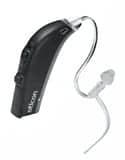
Hearing Aid Algorithms. Presented by Steve Armstrong, BSEE, Senior Design Architect, Hearing Instruments Division, Gennum Corp, Burlington, Ontario. With the advent of digital signal processing (DSP) in hearing aids, algorithms and their development have taken an advanced role in the enhancement of amplified signals. This AAS translational research lecture will identify salient characteristics and approaches used in algorithms to enhance the signal for hearing-impaired individuals, as well as to identify those not yet fully applicable. Some of these relate to concepts and approaches to be discussed in the Special Session that follows the presentation (see Special Session: Hearing Aid Developments).

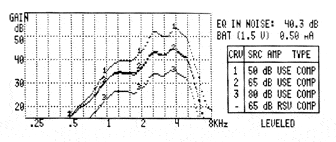
The intent of Armstrong’s lecture is to introduce engineering concepts and projections to practical uses of such algorithms, and to relate these results to sound quality and fidelity considerations. Practical considerations of electronic progress will be discussed, including current/power implications, open platform systems, bandwidth, dynamic range, phase and open fittings, power digital aids, and multiband trade-offs. For example, gain adjustments result in a multitude of signal processing distortions, depending on the manner in which the gain adjustments are made.

Additionally, future directions of digital listening devices for the hearing impaired will be presented.

Special Session: Hearing Aid Developments
Directionality/Sound Quality. Presented by Todd Ricketts, PhD, Bill Wilkerson Center, Vanderbilt University, Nashville. Many elements in the selection and fitting of a hearing aid can impact the directional benefit that the wearer obtains. An understanding of these factors is important in trying to optimize hearing aid fittings, weighing the potential impact of fitting decisions on benefit, and deciding whether or not to select a directional hearing aid. Frequency, range of directivity, hearing aid style, venting, microphone orientation, and low-frequency gain compensation are among the factors that should be considered when fitting a directional hearing aid. Rickett’s presentation will provide data relative to measurements of these factors with directional microphone hearing aids.

 David Kemp, PhD, counsels an NIH-Mentored Student award recipient. Kemp, who is credited with discovering otoacoustic emissions in 1978, was the 2005 Carhart Memorial Lecturer.

Noise Reduction and Other Automatic Features. Presented by Ruth Bentler, PhD, University of Iowa, Iowa City, Iowa. Sound classification—or sound-scene analysis, as the term is used in hearing aid algorithm design—is intended to alter the signal processing scheme across different listening environments. Although the rules of the algorithms vary from manufacturer to manufacturer, the obvious goal is for the amplification algorithm to correctly identify those “noises” that interfere with communication and reduce or eliminate their impact. In her presentation, Bentler will provide an overview of some of the automatic systems available, along with data from a large-scale project (“randomized” control trial) addressing the effectiveness of noise reduction in hearing aids for mild-to-moderate hearing loss subjects.

Feedback Cancellation in Hearing Aids. Presented by James Kates, PhD, GN ReSound, Chicago. Feedback presents a serious problem in hearing aids, often limiting the maximum gain that can be provided by the instrument. Kates’ presentation will review the causes of acoustic and mechanical feedback in hearing aids and the effects of feedback on the system behavior. Techniques for reducing feedback will be described, with an emphasis on systems that cancel feedback by modeling the feedback path and subtracting the estimated feedback signal from the hearing-aid input. Feedback cancellation effectiveness and limitations on system performance, including problems caused by sinusoidal inputs and room reverberation, will also be discussed.

 Downs to Receive Lifetime Achievement Award
Marion Downs, MA, will receive the AAS Lifetime Achievement Award. Downs pioneered the first universal newborn hearing screening project more than 30 years ago, and currently serves as Professor Emerita at the University of Colorado Health Sciences Center. She has passionately championed the idea that early identification is a basic human right which should be available to all infants, publishing nearly 100 articles and books on the subject, and lecturing in 15 countries.

Downs received her BA from the University of Minnesota, an MA from the University of Denver, and an Honorary Doctorate of Human Services from the University of Northern Colorado. Her honors include a gold medal of achievement from the University of Minnesota; the Medal of the Ministry of Health of South Vietnam; the Honors of the American Speech-Language-Hearing Association; the AAS Carhart Memorial Lectureship Award; and the International Audiology Society’s Aram Glorig Award. Additionally, the Marion Downs National Center for Infant Hearing at the University of Colorado was dedicated in her name, and last year Oticon funded the Marion Downs Lecture Series in honor of her work on her 90th birthday.

Special Session: Introduction to NIH Research
A Labyrinthine Walk: Lessons for Careers in Auditory Research. Presented by Fred Bess, PhD, Bill Wilkerson Center, Vanderbilt University, Nashville. A life devoted to scientific discovery is filled with many personal satisfactions, frustrations, and even disappointments; the path to and the process of scientific inquiry is typically not linear. Intended for aspiring young investigators, this presentation focuses on the lessons learned from a personal journey in audiology research from one of hearing care field’s most distinguished researchers, Fred Bess. As part of the journey in inquiry, it has been observed that science calls for great passion and effort, perseverance, an openness to new possibilities, and scientific integrity. This presentation also emphasizes other personal and professional issues that researchers will encounter and need to consider in the pursuit of their scientific interests.

Daniel Sklare, PhD, will also head an NIH research forum during the conference. With NIH support, the meeting also provides travel to students and residents engaged in research, enabling them to present their work to an audience that includes both basic and clinical research scientists.

How To Attend
A preliminary program, along with meeting registration is available online at www.amauditorysoc.org, or contact: American Auditory Society, 352 Sundial Ridge Circle, Dammeron Valley, UT 84783; (435) 574-0062; email: aas@amauditorysoc.org

AAS At A Glance, March 5-7

The meeting will feature the following events:

Carhart Memorial Lecture Joseph B. Nadol, Jr, MD
Special Session: Hearing Aids Todd Ricketts, PhD
Ruth Bentler, PhD
Jim Kates, PhD
Translational Research Presentations John J. Rosowski, PhD
Ruth Litovsky, PhD
Doug Cotanche, PhD
Steve Armstrong, BSEE
Life Achievement Award Recipient Marion Downs, MS, DHS
Podium Presentations 52+ submitted papers
Introduction to NIH Research Fred Bess, PhD
NIH Research Forum Daniel Sklare, PhD
NIH-Mentored Student Posters 15 posters
General Posters Variable
Technology Update Sessions 16 sessions (30 minutes each)
|
|

MEDIA CENTER

Interactive Media
Resources
Classifieds
Calendar
Consumer Resources
Media Kit
Advertiser Index
EAB
Reprints
Submit an Article

ADDITIONAL ONLINE RESOURCES

Allied Healthcare
Medical Education
24X7mag
Chiropractic Products Magazine
Clinical Lab Products (CLP)
Orthodontic Products
The Hearing Industry Resource
HME Today
Rehab Management
Physical Therapy Products
Plastic Surgery Products
Imaging Economics
Medical Imaging
RT Magazine
Sleep Review
SynerMed Communications
IMED Communications
Practice Growth
Practice Builders
powered by:
Copyright © 2008 Ascend Media LLC | The Hearing Industry Resource | All Rights Reserved.
Privacy Policy | Terms of Service