Issue StoriesHearing Protection for Musiciansby Patty Niquette, MA Musicians need to hear well, and safely, when they play. Standard industrial-type hearing protectors muffle sound and frequently provide too much attenuation and occlusion to be acceptable for musicians. This article describes the selection of high-fidelity earplugs for musicians. Musicians experience significant sound exposures, and according to Chasin,1 most will develop some degree of music-induced hearing loss. Other professionals in the music industry (eg, audio engineers, recording engineers, managers, disk jockeys, etc) also experience significant sound exposures, and they are also at risk for cochlear damage and hearing loss. Perhaps even more damaging than hearing loss are the secondary effects that often accompany it or occur in isolation: tinnitus, diplacusis, and hyperacusis. Most professionals involved in hearing care are familiar with tinnitus, the perception of noise (ringing, etc) in the ears. However, fewer of us may routinely recognize diplacusis, a pathological matching of frequency and pitch that ultimately results in some notes sounding flat; due to this, diplacusis can be career-threatening to those in the music industry. Hyperacusis, a reduced tolerance of suprathreshold sound, is also career-threatening to those in the music industry. In the hyperacousic ear, sounds that are easily tolerated by most people (eg, laughter, a telephone ring, or live music) are uncomfortable or intolerable. There are no known cures for noise-induced hearing loss (NIHL), tinnitus, diplacusis, or hyperacusis; early identification of auditory dysfunction and prevention of cochlear damage is the only viable treatment at this time. Damage-Risk Criteria In terms of general risk, the music genre itself is irrelevant; the risk for cochlear damage and hearing loss exists for all types of music. It should be noted that musicians located near percussion instruments (eg, drums) and brass instruments (eg, trumpet, trombone), as well as those located near amplifiers, tend to have higher exposures.
According to the 1983 Occupational Safety and Health Administration (OSHA) standard,2 the average person can be exposed to 95 dBA of noise for 4 hours per day, 5 days per week without undue risk of developing a permanent hearing loss over a 40-year time span (Table 1). The OSHA standard uses a 5 dB time-intensity trade-off (also known as the exchange rate): for every 5 dB increase in the noise level, the allowed exposure time is reduced by half (concomitantly, for every 5 dB decrease in the noise level, the allowed exposure time doubles). With only 10 dB of hearing protection, the noise exposure of a person in 95 dB of noise is reduced to 85 dB, which is considered safe for 16 hours per day. The 1998 National Institute of Occupational Safety and Health (NIOSH) damage-risk criteria3 are more conservative, and use a 3 dB time-intensity trade-off (Table 1). Under the NIOSH standard, an individual could be exposed to a 95 dBA sound level for only 45 minutes per day. With 10 dB of hearing protection (an actual exposure level of 85 dB), the same person could be in a 95 dBA environment for 8 hours per day, 5 days a week.
It is difficult to directly apply either the OSHA or NIOSH recommendations to predict safe levels of noise exposure for those in the music industry, due to the spectral differences of music compared to industrial noise, the intermittent nature of music exposures, and rest periods. However, damage-risk criteria are helpful in providing a general estimate of the amount of hearing protection needed, and it is important to note that many people do not need much hearing protection (often less than 15 dB) to dramatically reduce the risk of significant hearing impairment. The Problem with Conventional Earplugs Too much high-frequency attenuation. Inserting an earplug into the ear removes the ears natural resonant peak (approximately 17 dB at 2700 Hz in the average ear). This insertion loss, when combined with the earplugs attenuation characteristics, results in a net treble deficiency of 15-20 dB,4 which causes music and voices to sound muffled. Most musical instruments have a significant amount of energy above 1000 Hz, with harmonics that are more intense than the fundamental.1 These high frequency harmonics are vital to accurate loudness perception, and they also contribute to the richness of the music. Earplugs with too much high frequency attenuation destroy the tonal balance, which can result in mishearing or overplaying to compensate for the lack of high frequency sound heard through the earplugs. Too much attenuation overall. Musicians need to hear, and hear well, while they play. Standard industrial-type hearing protectors not only muffle sound, they often provide too much attenuation; deeply inserted foam earplugs can provide 30-40 dB of sound reduction when far less is needed to protect hearing. Excessive attenuation may also result in mishearing or overplaying. Drummers, for example, may be unable to monitor the level of play and sustain wrist and arm injuries from striking the drums too forcefully. Too much occlusion effect. Occlusion effect is an increase in sound pressure level at the eardrum in the occluded ear compared to the open ear, for sounds generated by the user (eg, vocalist, brass, or woodwinds). When a musician sings or blows into the mouthpiece of an instrument, the sound is conducted via the jaw to the bone surrounding the inner portion of the ear canal. With standard earplugs, this results in an elevated sound pressure level behind the hearing protector. This elevated level, experienced over several hours of rehearsal or performance, may put the musician at risk for overexposure and lead to tinnitus and hearing loss. Occlusion effect can be greatly reduced with earplugs that seal deeply in the bony portion of the ear canal.
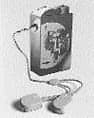
It should be noted that occlusion effect isnt always a problem; if the musician isnt a vocalist or horn player, occlusion may not be an issue. Sometimes a bit of occlusion effect is desirable for vocalists as an aid in self-monitoring. In this case, a slightly shorter plug that doesnt seal quite as deeply may be more appropriate. However, for the majority of individuals, a deeply sealed earplug is the best option. History and Design of High-Fidelity Hearing Protection Musicians Earplugs have two parts: an attenuator button and a deeply fitted custom earmold. The patented attenuator buttons have a diaphragm that functions as an acoustic compliance, while the volume of air in the sound bore of the earmold acts as an acoustic mass. The combination of the two produces a resonance at approximately 2700 Hz (as in the average normal ear) resulting in a smooth, flat attenuation across frequencies (Figure 2). Shortly after the introduction of Musicians Earplugs, Etymotic Research and Aearo Corp jointly developed the ER-20, an affordable non-custom high-fidelity earplug that provides 20 dB of flat attenuation (Figure 3). Options and Guidelines for Choosing Hearing Protection Table 2 provides guidelines as to which attenuators to use, depending on the type of sound exposure. Note that non-custom ER-20 earplugs are recommended in all situations, indicating that no one should go without hearing protection. With Musicians Earplugs, the user typically has one set of earmolds but two or three sets of attenuators for use in different environments. The optimal attenuator is the one that provides the minimum amount of attenuation that will reduce sound exposures to a safe level. A musician may even choose to use different attenuators for each ear. The author once fitted a guitarist who routinely used an ER-15 in one ear, and an ER-25 in the other. The ear with the ER-25 earplug was closer to the drums, so the stronger filter afforded him greater protection without causing him to feel unbalanced. Role of Manufacturers Role of Hearing Care Professionals
TABLE 2. Recommended earplugs relative to the type of instrument or sound sources encountered by the musician, teacher, or technician. Chart adapted from Chasin.1 Musicians Earplugs are a custom product that require professional fitting. It is essential that professionals who work with musicians:
Earmold Impression Technique In my experience, it is important that the finished earmolds take the musicians playing style and mouth movements into account. To that end, ask musicians to play or pretend to play their instrument while the impressions are curing. Vocalists should sing; guitarists can play a favorite passage of air guitar; horn players can blow on the mouthpiece of their instrument. Examine the finished impressions carefully. If the impressions do not extend well past the second bend or if there are gaps in the impression, repeat the procedure. Even experienced clinicians remake impressions. Properly fitting earplugs cannot be made from inadequate impressions. Fitting, Use, and Care of Earplugs With proper care, earmolds and attenuator buttons will last for years. Earmolds and attenuators can be inspected and the physical fit verified each time the user returns for a visit (at least annually). The need for earmold replacement varies greatly among users. When last surveyed, half of the earmold labs reported a preference for silicone earmolds, and the other half reported a preference for vinyl. Either is acceptable. Attenuator buttons are available in clear, beige, red, or blue, and they can be partially or completely countersunk into the earmolds. Verification of Performance Occlusion effect. Occlusion effect is a low-frequency phenomenon, occurring mostly below 500 Hz. An occlusion effect of 20 dB or greater is significant. Reduction of the occlusion effect can be achieved by sealing the earplugs deeply in the bony portion of the ear canal. The only recourse to an occlusion effect problem is to remake the earmold from a new impression in order to improve the seal. Difficult fittings. Not all ears are created equal. There are cases in which the sound quality or performance of Musicians Earplugs may be compromised (eg, when the user has narrow ear canals). In a narrow ear canal, if the earmold portion of the plug is made long enough to seal past the second bend, the bore diameter isnt wide enough to provide the necessary high-frequency boost to compensate for insertion loss. As a result, the high frequencies are rolled off. In this case the solution is to shorten the length of the earmolds to allow for a wider bore. This provides the flat attenuation needed for a high-fidelity response, but with one compromise: Occlusion effect is increased due to the shallower depth of the seal. Conclusion Acknowledgements
Correspondence can be addressed to HR or Patty Niquette, Etymotic Research, 61 Martin Lane, Elk Grove Village, IL 60007; email: PNIQUETTE@aol.com. References
|
|
|
|
ADDITIONAL ONLINE RESOURCES |
|